Seeing a smartwatch that measures blood pressure advertised, many people assume it replaces the cuff. It does not: cuffless watches estimate readings from light sensors and need cuff calibration, while guidelines still recommend upper-arm cuffs.
Blood pressure is one feature to weigh when choosing the best best health tracker, and it is the one where the sensor type changes how far you can trust the number.
Cuff-based and cuffless watches are different tools
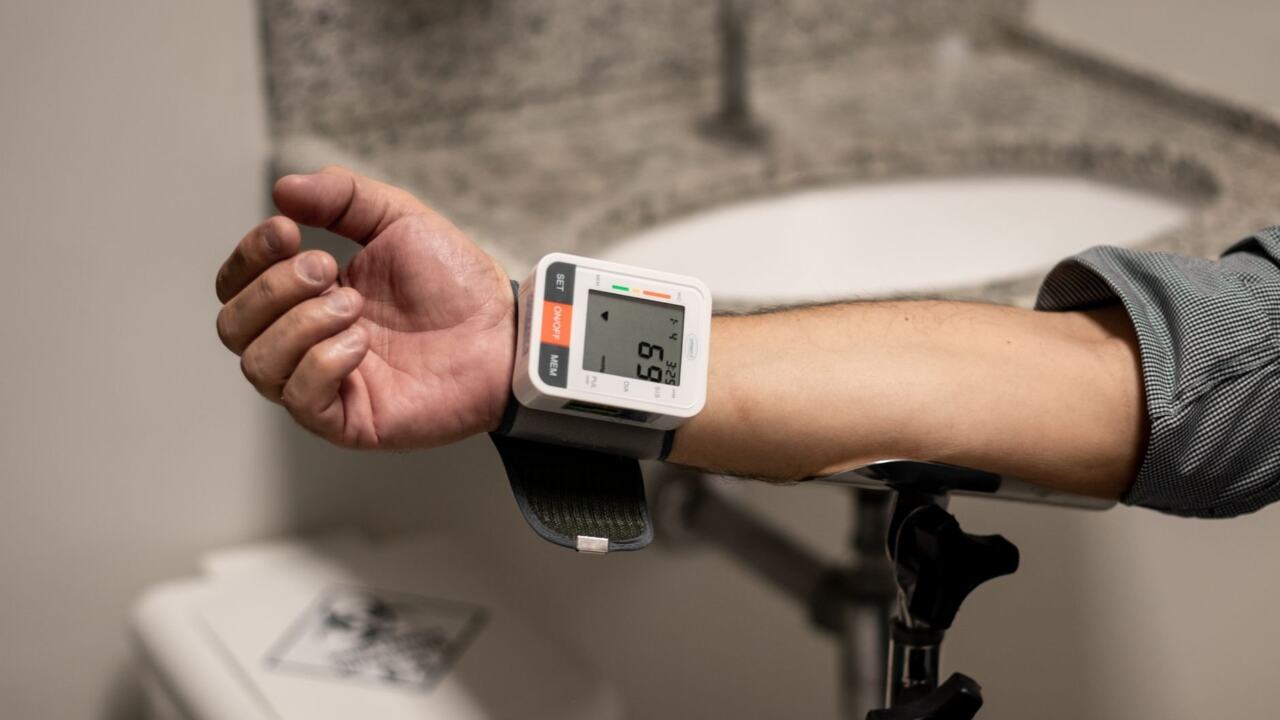
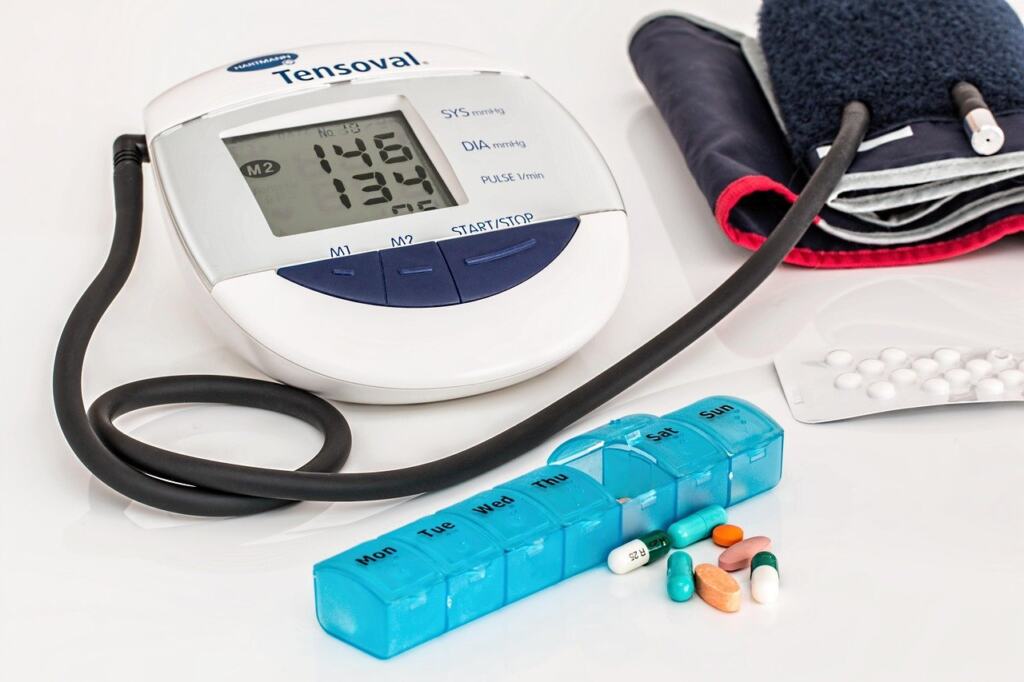
Most confusion comes from treating every wrist device as the same thing. Home monitors usually work by oscillometry: an automated inflating cuff senses pressure oscillations, and a validation study notes these devices are common because they are simple and reduce observer subjectivity. Guidelines, as the Frontiers in Cardiovascular Medicine authors put it, recommend only upper-arm inflatable cuff measurements.
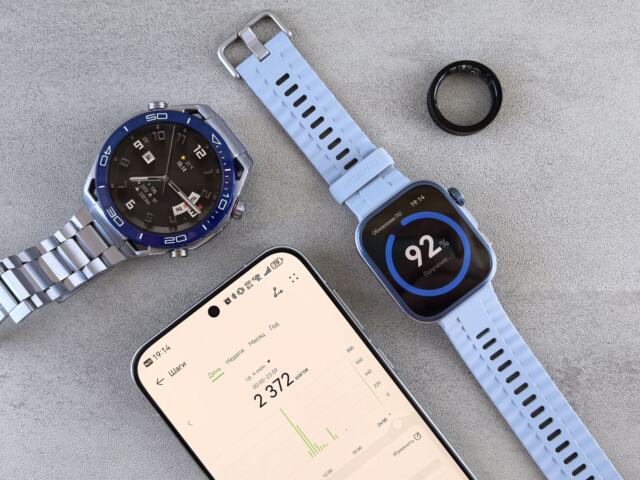
A watch can follow either route. The Omron HeartGuide has an inflatable cuff built into a fitness-tracker style wristband, so it inflates like a cuff monitor, only at the wrist. Cuffless watches skip inflation and rely on photoplethysmography (PPG), an optical pulse signal that the same study describes as implemented in many wearable devices. Samsung Galaxy Watch models belong to this second group: they need an upper-arm cuff for set-up, as covered below.
| Criterion | Cuff-based wrist device (for example Omron HeartGuide) | Cuffless PPG watch (for example Samsung Galaxy Watch) |
|---|---|---|
| How it senses | Inflatable cuff built into the wristband | Optical photoplethysmography signal, no inflation |
| What the number means | An inflation-based reading taken at the wrist | Relative changes in pressure, not absolute numbers, anchored to a cuff baseline |
| Accuracy yardstick | Cuff standard ISO 81060-2:2018: mean difference within ±5 mmHg, SD no more than 8 mmHg | IEEE 1708 criterion: mean absolute difference below 7 mmHg for systolic and diastolic |
| Standards coverage | Cuff standards apply | Cuff standards do not apply to available consumer cuffless devices |
| Planning use | Choose when you want a discrete reading and accept a wrist position | Treat as a trend aid and keep a validated cuff for decisions |
Figures come from Consumer Reports and the peer-reviewed long-term validation study.
Common misconceptions about watch readings
- “Calibrate once and it stays accurate.” Samsung’s support page says the Galaxy Watch needs initial and periodic calibration every 28 days using a third-party upper-arm cuff, with three cuff measurements taken within 30 minutes. So yes, a watch like this needs a cuff, and the cuff has to be a good one.
- “A regulatory label proves it is accurate.” The Frontiers authors report that Samsung smartwatches receive FDA and CE labels yet are often insufficiently validated. A label shows a regulatory pathway was followed; it does not replace published error data.
- “The watch shows my true number.” Consumer Reports explains that cuffless devices can only measure relative changes in blood pressure, not absolute numbers. A rising or falling trend is the realistic use.
What validation studies show about error
Galaxy Watch 5 against a home cuff
In the long-term study, 37 participants completed a 28-day protocol comparing a Samsung Galaxy Watch 5 with an Omron M4 reference. Right after calibration, the mean difference against the cuff was negligible: –0.34 mmHg systolic and 0.62 mmHg diastolic.
That tight agreement faded as blood pressure moved away from the calibration point. When the reference reading was 10 mmHg from the calibration value, the mean difference rose to 3.4 mmHg systolic and 5.1 mmHg diastolic. The diastolic figure sits just above the ±5 mmHg mean-difference limit that ISO 81060-2:2018 sets for cuff devices, although that standard was written for cuffs rather than watches. The practical lesson is that a freshly calibrated watch looks best on a day close to the one on which you calibrated it.
Galaxy Watch Active 2 and hypertension detection
A study of 40 patients compared the Galaxy Watch Active 2 with ambulatory monitoring. Sensitivity for detecting systolic and/or diastolic hypertension was 83% and specificity 41%. The area under the curve was 0.78 for systolic and 0.93 for diastolic hypertension.
Those numbers mean the watch caught most hypertensive cases but was poor at correctly clearing people without hypertension, so a high watch reading is a prompt to check with a cuff, not a result. The authors also found a systematic bias toward the calibration point, overestimating low pressures and underestimating high ones, and concluded that smartwatch blood pressure measurement is not yet ready for clinical usage.
Devices, clearance status and price
Matching a named watch to a clearance claim takes care, because the evidence differs by model.
- Omron HeartGuide (BP8000-M). This is the wristband-cuff design. Consumer Reports priced it at $499, the most expensive model it tested, and gave it a very low accuracy score, the lowest of the models tested. Its price and its cuff-style design do not guarantee closeness to an upper-arm monitor.
- Samsung Galaxy Watch. Samsung’s support page states that the blood pressure feature cannot be used for monitoring in the United States. For markets where it is offered, it needs a phone running Android OS 12 or later and a watch on Wear OS 4.0 or later.
- FDA clearance in general. Look up the exact model in the FDA’s device database and read what the clearance actually covers. Then look for a published validation study for that model, since the Frontiers review shows labelled watches can still be insufficiently validated.
If your priority is a number you can act on, a validated upper-arm cuff beats every watch above. If you want convenience and trend awareness, a cuffless watch can supplement a cuff but not replace it.
How to take a reliable reading
Technique matters as much as the device, because posture and recent activity shift blood pressure. Follow these steps for any watch reading, and use the same routine when you take your cuff calibration or comparison readings.
- Wait before measuring. Samsung advises no smoking, bathing, exercise, alcohol or caffeine for at least 30 minutes beforehand.
- Sit and rest. Rest seated for at least 5 minutes before you begin, using a supportive chair.
- Use the same wrist every time. Consistency makes trends easier to read.
- Start the measurement yourself. The Frontiers authors note that manual activation is needed on the Galaxy Watch Active 2, and the algorithms are not openly disclosed, so you cannot see how the estimate is built.
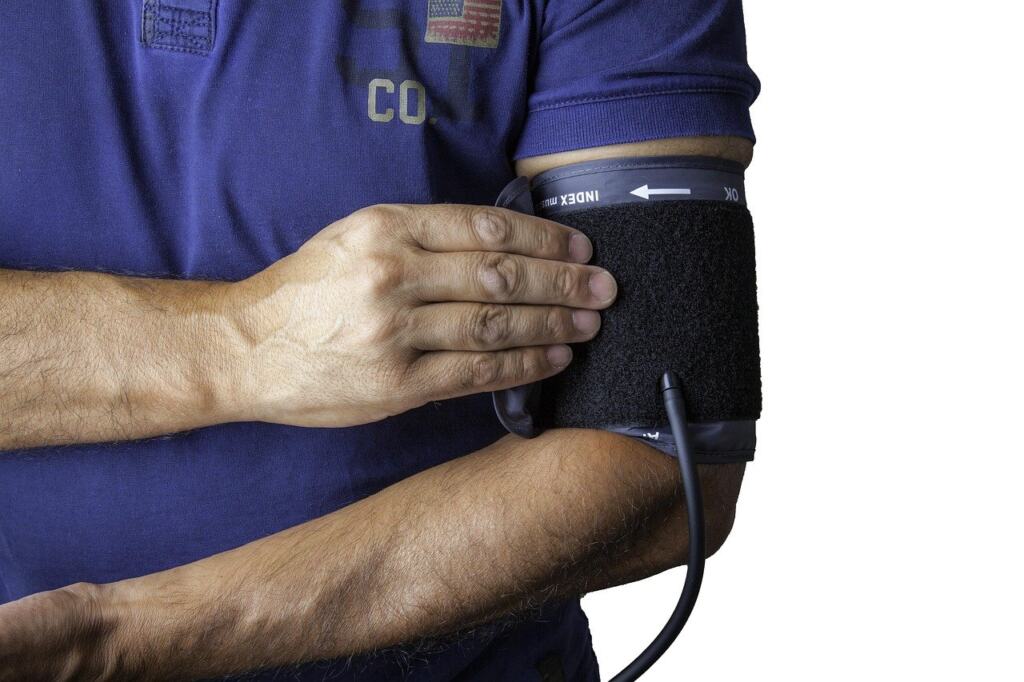
- Take your comparison cuff reading correctly. Consumer Reports advises placing the cuff on a bare upper arm at heart level.
When to confirm with an upper-arm cuff
The long-term study advises cuff confirmation when blood pressure fluctuates substantially or when diagnostic or therapeutic decisions are planned. In practice, use the watch for day-to-day trends, and rely on a cuff whenever a reading is surprising, persistently high, or about to inform a conversation with a clinician about treatment.
Fitness and safety features sit alongside blood pressure on many watches. If you are buying for an older relative, Fall Detection Technology: The Complete Guide To Smarter, Safer Aging In 2026 – Bioconnected covers that side of wearables, and Smart Rings Explained: What They Are, How They Work, and Whether You Need One in 2026 – Bioconnected helps if a ring suits you better than a watch.
Frequently asked questions
| Question | Answer |
|---|---|
| Can I use a smartwatch reading to diagnose high blood pressure? | No. Samsung states that the blood pressure function is not intended for use in the diagnosis of disease, so use it as a prompt for a proper cuff check. |
| Are wrist cuffs as accurate as upper-arm cuffs? | Generally not. Consumer Reports says wrist cuffs are generally not as accurate as those worn on the upper arm. |
| Which cuff should I buy as my reference? | Choose an upper-arm, inflating-cuff monitor and check it against the list of validated devices from the American Medical Association, as Consumer Reports advises. |
| Does the Galaxy Watch blood pressure feature need a particular phone? | Samsung lists a phone running Android OS 12 or later and a watch running Wear OS 4.0 or later, per its support page. |