How many calories are burned walking 10,000 steps is a common fitness question. The reader wants a clear, practical answer. This article gives simple estimates, explains key variables, and shows easy ways to get a personalized number. The reader will learn quick checks they can use with a phone or watch.
Key Takeaways
- Walking 10,000 steps typically burns between 300 and 600 calories, depending on body weight, pace, and stride length.
- A practical estimate is 0.04 to 0.06 calories burned per step for most adults, making quick calorie calculations easy without special devices.
- Using METs and walking duration offers a personalized calorie burn estimate, with moderate pace walking around 3.5 METs.
- Increasing pace, adding incline, or carrying weight boosts calories burned during 10,000 steps without extending walking time.
- Wearing devices that track heart rate and GPS data improves calorie estimation accuracy by measuring true pace and distance.
- Regularly comparing device readings with formula results helps tailor calorie tracking to your individual stride and pace for better fitness insights.
Estimated Calorie Burn For 10,000 Steps — Average Ranges And Quick Benchmarks
Average adults burn calories when they walk. For many people, walking 10,000 steps burns about 300 to 600 calories. The range changes by body weight, walking pace, and step length. A person who weighs 120 pounds will burn near 300 calories. A person who weighs 160 pounds will burn near 400 calories. A person who weighs 200 pounds will burn near 500 calories.
Pace shifts the number. A brisk pace raises the burn. A slow stroll lowers it. For example, a 160-pound person walking at a moderate pace might burn 400 calories for 10,000 steps. The same person walking faster might burn 450 to 500 calories. Uphill sections increase calories more than flat ground.
Step length also matters. People with longer strides take fewer steps for the same distance. Two people can take 10,000 steps but cover different distances. A longer stride means more distance and more calories. A shorter stride means less distance and fewer calories.
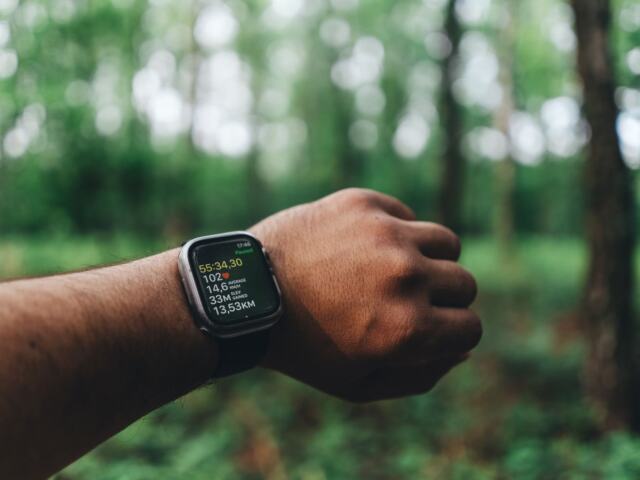
Devices provide checks. Most phones and fitness watches estimate calories using weight, age, and heart rate when available. These devices give a practical benchmark. The reader should treat device estimates as useful but imperfect. Devices often vary by 5–15 percent from lab measures.
Use quick benchmarks. If the reader wants a very simple rule, use 0.04 to 0.06 calories per step for most adults. Multiply steps by that number. For 10,000 steps, that gives 400 to 600 calories for heavier adults and 300 to 400 calories for lighter adults. This rule gives a fast check when the reader lacks a scale or heart-rate data.
How To Calculate A Personalized Estimate: Simple Formulas, Examples, And A Quick Calculator Method
A simple method gives a closer estimate. The reader needs body weight and step distance or steps. Step 1: convert weight to kilograms by dividing pounds by 2.2. Step 2: estimate distance for 10,000 steps. Many adults cover 4 to 5 miles for 10,000 steps. Step 3: use a walking calorie formula.
One practical formula uses METs (metabolic equivalents). Walking at a moderate pace equals about 3.5 METs. The formula reads: Calories = METs × weight(kg) × duration(hours). The reader can get duration by dividing distance by pace. Example: a 160-pound person equals 72.7 kg. If they walk 5 miles at a 20-minute mile pace, they walk for 1 hour 40 minutes (1.67 hours). Calories = 3.5 × 72.7 × 1.67 = about 425 calories.
The reader can use a shorter calculator method if they lack pace data. Use calories per mile by weight. Common values: 120–140 calories per mile for a 120-pound person, 160–180 for 160 pounds, and 200–220 for 200 pounds. If 10,000 steps equal 5 miles, multiply miles by calories per mile. For the 160-pound person: 5 miles × 170 = 850 calories. That number looks high because some step counts use shorter stride lengths. Confirm distance first.
A direct steps-to-calories quick formula helps avoid confusion: Calories = steps × calories per step. Use 0.03–0.05 calories per step for lighter adults and 0.05–0.07 for heavier adults when walking at a moderate pace. Example: a 160-pound person using 0.045 calories per step: 10,000 × 0.045 = 450 calories.
The reader should test one method against their device. They should record weight, steps, and device calories for several days. Then they should average the results. This approach gives a personal conversion that matches their stride and pace.
Ways To Increase And Accurately Track Calories Burned During 10,000 Steps
The reader can increase calories burned with a few clear changes. They can add incline, increase pace, carry light weight, or add short bursts of higher effort. Walking uphill raises energy use without adding much time. Fast intervals raise heart rate and calorie burn for the same step count.
Accurate tracking needs two things: correct weight input and heart-rate or pace data. The reader should update weight in their device. They should wear the device on the wrist or chest where it reads heart rate reliably. Heart-rate sensors improve calorie estimates more than step counts alone.
GPS helps with distance. The reader should let the phone or watch use GPS when walking outdoors. GPS gives true distance and pace. The device then converts distance into calories with fewer errors. On treadmills, the reader should enter stride length or confirm treadmill distance to keep estimates accurate.
Use a simple validation routine. The reader should walk a known distance, like a measured loop or a track. They should compare device calories to a formula result. If the device reads much higher or lower, they should adjust device settings or pick a different calories-per-step number for short-term tracking.
Finally, the reader should treat calories as one tool. Steps help build consistency and movement. Tracking calories helps reach weight or fitness goals. The reader should focus on steady progress and use these tracking tips to make daily numbers more reliable.