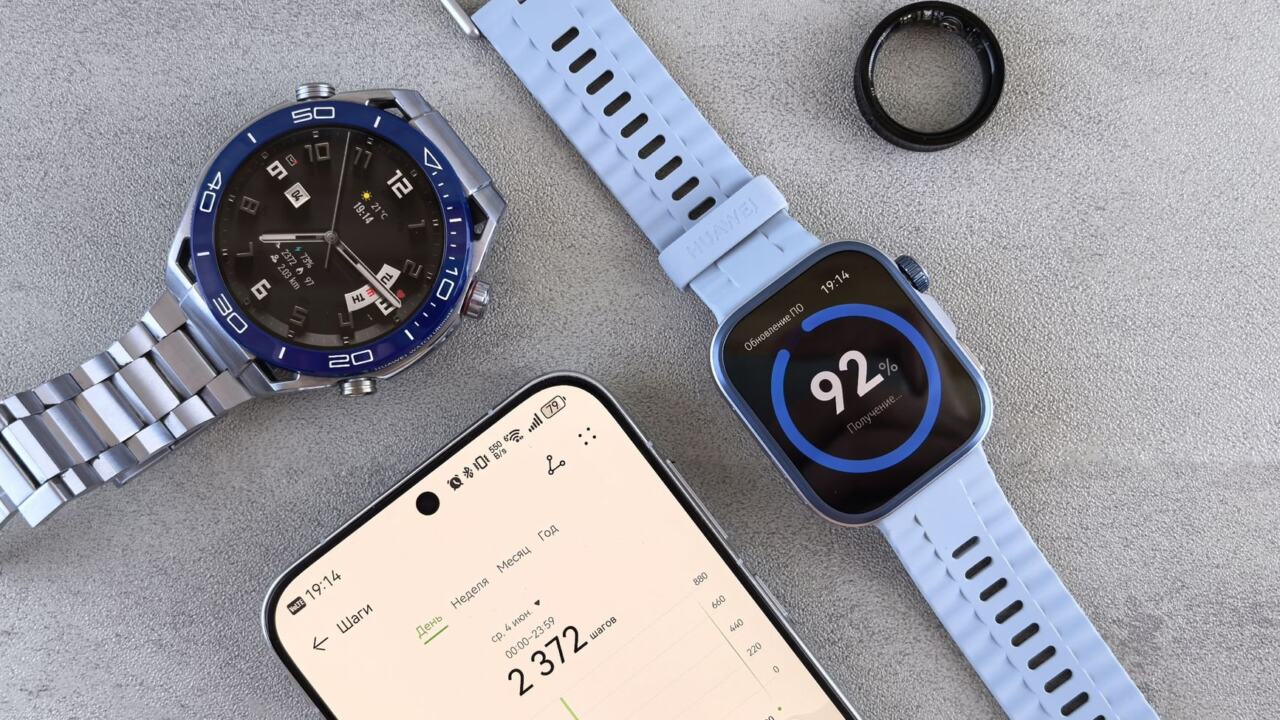
Smart ring vs smartwatch comes down to form factor: a ring usually wins on battery life and overnight comfort, while a smartwatch wins on screen, GPS and active-workout features. Choose by the job you most need done.
If you are still deciding which kind of device suits you at all, start with our guide to the best health tracker. For how rings work in detail, see Smart Rings Explained: What They Are, How They Work, and Whether You Need One in 2026 – Bioconnected.
Why form factor decides the trade-off
Size is the root difference between the two devices. Samsung’s buying guide says smart rings often have better battery life because of their smaller size and lower power consumption. Its spec table lists no display for the Galaxy Ring, while the Galaxy Watch9 has a 1.3-inch display (432 x 432) and the Watch Ultra2 a 1.5-inch display (480 x 480). The Galaxy Ring itself measures 7.0 x 2.6 mm and weighs 2.4 g in size 6.
The practical result is a clear exchange. A ring gives up the screen and on-wrist interaction in return for light weight and endurance. A watch keeps the screen and the extra hardware, and pays for them in charging. The rest of this comparison follows from that single trade.
Battery life and charging
Rings last longer between charges, and most of the gap is in the mainstream watch category. A published comparison guide puts mainstream rings at 5 to 8 days and mainstream smartwatches at about 1 day, citing the Apple Watch Series 11 as the example. A women’s health comparison gives a similar split of roughly 5 to 7 days for a ring against 1 to 2 days for a watch.
Named ring models fit that pattern. A reviewer’s month-long test lists the Oura Ring 4 at up to 8 days, notes its battery is under 20 mAh, and reports a full seven days on a charge. The same reviewer says smartwatches generally do not last more than a day or two. Samsung says the Galaxy Ring lasts up to 7 days in its testing, and that this varies with ring size and usage.
Smartwatches are not all one-day devices. The comparison guide above gives up to 5 to 12 days for fitness-focused watches such as the Garmin Venu 4. If battery is your main reason for considering a ring, a Garmin-style fitness watch narrows the gap while keeping GPS and a screen.
Charging habits matter as much as the headline figure. A ring that needs a longer top-up but far less often fits people who dislike daily routines. A watch with quicker charges suits anyone who already has a desk or bedside charging slot.
Sleep tracking and overnight comfort
For sleep, the ring’s advantage is wearability and stability rather than a published accuracy margin. Samsung says the Galaxy Ring can be more comfortable for sleeping, especially if you do not like wearing a watch to bed. The women’s health comparison rates a ring’s overnight comfort as excellent, describing it as light and screen-free, and describes the watch as bulkier.
Stability matters too. A wearable accuracy comparison says rings shift less overnight, which reduces motion interference and supports steadier sleep-time readings. That argument applies to rings such as the Oura Ring, and it is qualitative: the source gives no numeric accuracy comparison for sleep.
Choose a ring for sleep if you have stopped wearing a watch at night, because a device left on the nightstand records nothing. Keep a watch for sleep only if you are comfortable wearing it and have somewhere else in the day to charge it.
Accuracy: what changes the readings
Accuracy depends on sensor placement, device fit, motion, firmware updates, battery condition and device age, according to the same wearable accuracy comparison. Those conditions explain why the right device depends on when you are measuring. Wrist-based readings can be affected by loose fit, tattoos, rapid arm movement or high-intensity exercise, so a watch worn snugly gives its best results during steady activity.
A ring avoids the wrist-motion problem, but it has its own fit dependency: a ring that spins or sits loose on the finger faces the same fit issue as a loose watch strap.
The best head-to-head impression in this evidence comes from a single reviewer. After a month of wear, that reviewer found every smartwatch they had owned better at automatically detecting an activity than their Oura Ring, while the Oura Ring 4 seemed just as accurate, if not more, at tracking steps. That is one person’s subjective impression, not a validation study, so use it as a hint about workout detection rather than as a ranking.
Features, apps and ecosystem
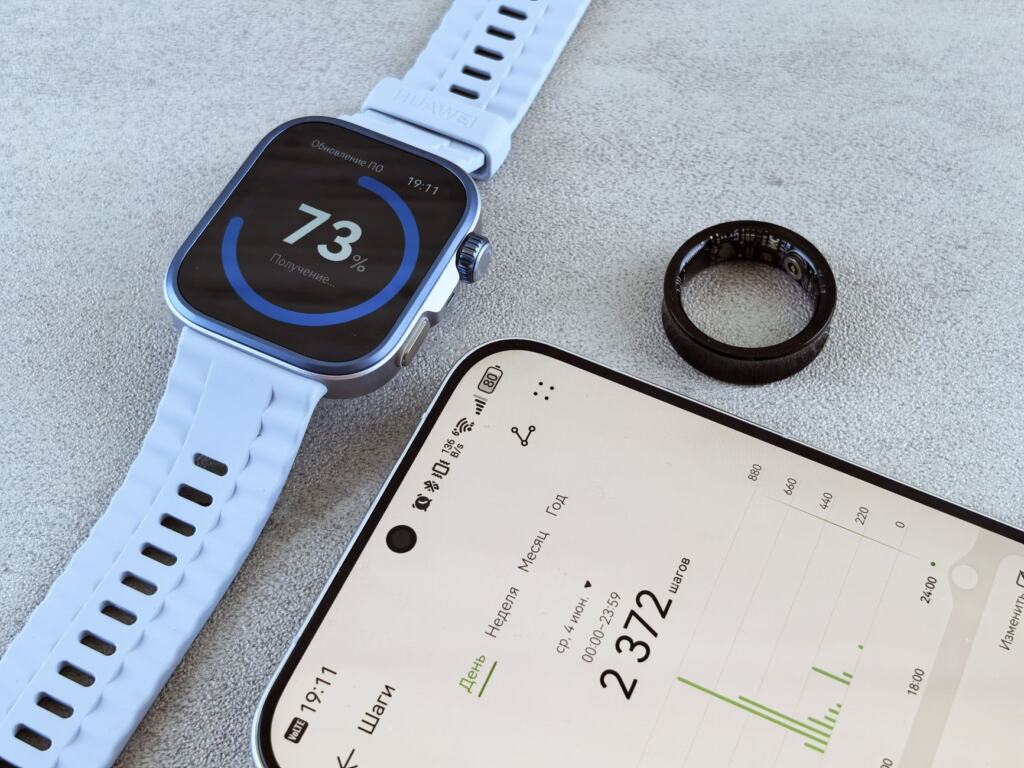
Smartwatches carry the wider feature set. Samsung says they offer a broader range of features, including GPS tracking and music streaming, and that Galaxy smartwatches tend to have more advanced sensors than smart rings, with blood pressure, heart rate, sleep and body composition given as examples. The Apple Watch sits in the same category of screen-first devices.
A ring is a quieter product by design. With no screen, you check results in a companion app instead of glancing at your wrist. People who want to be interrupted less will see that as a benefit; people who want to read a message, start a workout or control music from the wrist will not.
Older adults who want simple, glanceable data should weigh the screen question first. Our guide to the best fitness tracker for seniors compares devices with that priority in mind.
Price and spec comparison
Price ranges overlap, so cost rarely settles the choice by itself. The table gives typical figures and what each means for your decision.
| Attribute | Smart ring | Smartwatch | Planning use |
|---|---|---|---|
| Typical price | $250 to $400 | $150 to $500 | Watches start cheaper; the ranges overlap at the top |
| Mainstream battery | 5 to 8 days | About 1 day (Apple Watch Series 11 example) | Rings suit people who dislike frequent charging |
| Fitness-focused watch battery | Not applicable | Up to 5 to 12 days (Garmin Venu 4 example) | Closes the battery gap if you want GPS |
| Typical charge time | 60 to 90 minutes | 30 to 60 minutes | Rings charge longer but less often |
| Display | None listed for Galaxy Ring | Galaxy Watch9 1.3-inch; Watch Ultra2 1.5-inch | Decide whether you need on-wrist reading |
Price, battery and charge-time ranges come from a smart ring vs smartwatch comparison guide, and display details come from Samsung’s buying guide.
The sticker price is not the full cost of a ring. Many rings lock full health insights behind a monthly fee, often $10 to $20 per month. Check the subscription terms before you compare totals. Premium models can also exceed the typical range: a reviewer lists the Oura Ring 4 at $499.
Which to buy by use case
- Sleep and recovery focus: choose a ring. It stays comfortable in bed and shifts less overnight.
- Running, cycling and gym sessions: choose a smartwatch with GPS. Garmin-style fitness models also keep battery life long.
- Calls, music and apps on the wrist: choose a smartwatch such as an Apple Watch or Galaxy Watch. A ring has no screen to show them.
- Charging-averse or low-distraction wearers: choose a ring, and check the subscription terms first.
- Both sleep and workouts matter: consider pairing a watch for the day with a ring for the night, if the budget allows.
If the choice still feels close, start with the device that fixes your biggest daily annoyance, whether that is a watch you will not sleep in or a ring that cannot show a workout. Revisit the choice if your habits change.

Frequently asked questions
Is a smart ring better than a smartwatch?
Neither is better across the board. A ring suits passive, comfortable wear, while a watch suits anyone who wants GPS, apps and a screen on the wrist.
Can a smart ring track workouts?
Only lightly. According to a wearable accuracy comparison, most smart rings are not designed for intense workouts and usually lack GPS and real-time activity feedback.
What phone does the Galaxy Ring need?
Samsung lists Android 11 or above and the latest Samsung Health app as requirements for the Galaxy Ring.
Is the Galaxy Ring a medical device?
No. Samsung states the Galaxy Ring is intended for general wellness and fitness purposes only.