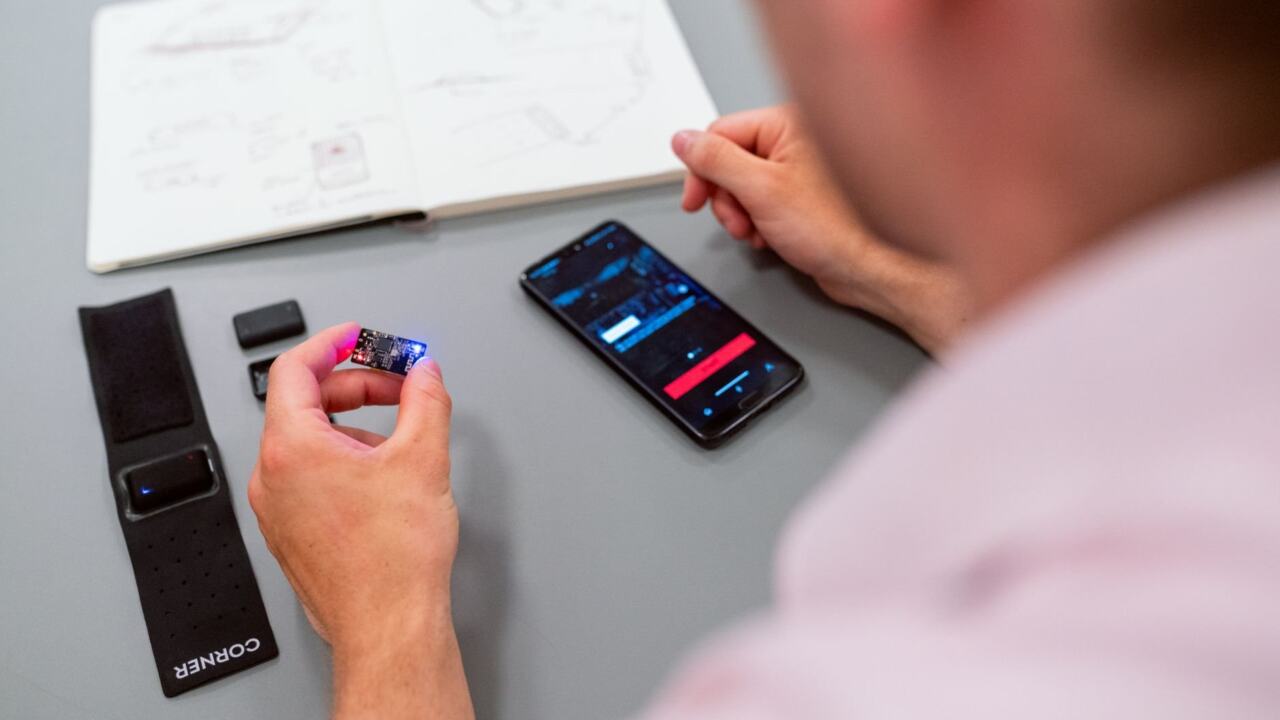
Glance at your wrist mid-run and the watch shows a pulse. So how do smartwatches measure heart rate? A light source shines into the skin, a detector reads the reflected light, and software converts changes in intensity into a pulse rate.
The condition that matters: this method reads pulse from blood volume, not from the heart’s electrical activity. Fit, skin and workout intensity therefore change how far a single number can be trusted.
This guide is the starting point for the science behind wearable sensors. It begins with the heart rate sensor on your wrist, then branches out to blood oxygen, chemistry-based sensing and the hardware that may follow.
Choose your route through the science
Readers arrive with different goals, and each goal has a sensible order to read in. Pick the route that matches yours and skip what you already know.
- You want to understand the sensor. Read the next section on light-based pulse sensing, then the comparison of light, electricity and oxygen methods.
- You want better readings from the watch you already wear. Go straight to the section on fit, skin, effort and repeat measurements.
- You want to know what else a wrist device can sense. Use the section on blood oxygen, irregular rhythm alerts and glucose.
- You want to know what is coming. Finish with the section on emerging wearables, which separates established methods from research directions.
How a smartwatch reads your pulse with light
A smartwatch measures heart rate with photoplethysmography, usually shortened to PPG. Cleveland Clinic describes PPG heart rate monitors as devices that send tiny beams of light into the skin and use sensors to detect changes in blood volume. The sensor never touches the heart. It watches the blood that the heart pushes through the tissue under the watch.
Light in, light out
The Royal Society of Chemistry explains the physics in plain terms in its overview of smartwatch science. Expanded blood vessels absorb more green light, and contracted blood vessels absorb less. Each heartbeat swells the vessels under the sensor and then lets them relax. The amount of green light that bounces back to the detector therefore rises and falls in step with the pulse.
The detector measures that reflected light, and a software algorithm converts the changes in light intensity into a pulse rate. The raw signal is a wavering line of brightness. The number on your wrist is a calculation made from that line. If you want a deeper walk through the optics and signal path, how do optical heart rate sensors work takes the same idea further.
Where software and machine learning come in
The conversion step is software, and this is where machine learning belongs in the picture. Machine learning is the family of methods that learn patterns from examples instead of following only fixed rules. Interpreting a wavering optical signal is the kind of task those methods are applied to. The practical consequence for a buyer is that two watches with similar-looking sensors can differ in how they process the signal, because the calculation is separate from the hardware.
The wider picture of how the sensor, processor, battery and apps fit together is covered in How Smartwatches Work: Inside Your Wrist Computer In 2026 – Bioconnected. It is a useful companion if you want to see where heart rate sensing sits among everything else a watch does.
Why a wrist sensor has built-in limits
The light source and the detector sit on the same side of a smartwatch, against the skin. According to the same Royal Society of Chemistry feature, that layout can result in lower accuracy than spectrometers. This is an honest design trade-off: a wrist device has to be small, comfortable and worn all day, so it cannot match laboratory optics.
It also helps to be precise about what is being measured. Cleveland Clinic states that PPG measures your pulse, whereas EKG technology picks up the heart’s electrical signals. In practice the two numbers usually agree closely, but they are different quantities. When you want to know why a reading looks odd, begin by asking whether the light path was clean and the blood signal strong enough.
A PPG sensor is one example of a broader class of devices that turn a biological signal into an electrical one. If the term is unfamiliar, What Is a Biosensor? A Clear, Practical Guide For 2026 – Bioconnected sets out what the word covers and how optical sensors relate to chemical ones.
Getting reliable readings from the watch you own
Reliable readings depend more on how you wear the watch and when you trust it than on which model you own. Treat the steps below as an order of operations: check the physical contact first, then the conditions, then the context.
- Wear it snug and in the right place. A smartwatch guide from a wearable maker advises that the watch should sit snugly against the wrist, about one finger above the wrist bone. Because the sensor depends on light entering the skin and returning to a detector, a watch that slides or gaps is more likely to give a weak signal.
- Check the skin under the sensor. Cleveland Clinic notes that PPG sensors do not work as well when the light travels through ink on the skin, so arm tattoos can produce inaccurate readings. If you have a tattoo on the wrist, try the other wrist or compare against another method before relying on the numbers.
- Expect lower trust at high effort. Cleveland Clinic reports research suggesting that as workout intensity goes up, the accuracy of PPG watches goes down. For easy and steady sessions the watch is a convenient trend tool. For hard intervals, an EKG-based monitor is the better reference, since Cleveland Clinic calls EKG technology the gold standard for accuracy.
- Repeat the reading when it matters. Samsung’s support guidance says measurements may need to be repeated at least five times for the most accurate results. A single spot check is a sample, not a verdict.
- Rest before you re-measure a surprising number. Samsung advises that if a measurement is very different from the expected heart rate, you should rest for 30 minutes and then measure it again.
One boundary deserves attention. Samsung states that its heart rate output is not intended to diagnose, cure, mitigate, treat or prevent disease. Use the watch to notice patterns in your own days, such as how your pulse settles after exercise or how it differs on a rushed morning. Take unusual or persistent changes, or any symptoms, to a clinician rather than trying to settle them by adjusting the watch.
Light, electricity and oxygen: comparing the methods
Wearable heart sensing is not one technology but a small set of physical principles. The table sets out the main ones side by side so you can see what each one senses and when it is the right tool.
| Method | What it senses | Accuracy position | Planning use |
|---|---|---|---|
| PPG heart rate (typical smartwatch) | Changes in blood volume, read from reflected green light | Latest models can be highly accurate, but lower than EKG; accuracy can fall as workout intensity rises | Everyday pulse, resting trends and steady exercise |
| EKG / ECG | The heart’s electrical signals | Described as the gold standard for accuracy | Reference measurement when precision matters, such as hard training |
| Pulse oximetry on a watch | Absorption of red and infrared light, compared to estimate blood oxygen | Uses two light sources, unlike optical heart rate monitoring | Blood oxygen estimates; treat as an indication, not a clinical result |
The figures and descriptions in the table come from Cleveland Clinic’s heart rate monitor guidance and the Royal Society of Chemistry’s smartwatch science feature.
The decision rule that follows is simple. If your question is how your pulse behaves across an ordinary week, a PPG watch is well suited and easy to keep wearing. If your question is whether a specific hard effort pushed your heart rate to a particular level, an EKG-based device is the safer reference. Oxygen is a different question again, and it needs a different light recipe.
Light is not the only way to sense a heartbeat. Some research and consumer devices read the body’s mechanical vibration instead, a method explained in what is ballistocardiography. Other body measurements use electricity passing through tissue: how do smart scales measure body fat explains how that works for a bathroom scale. Seeing these side by side makes one point clear: each sensor can only report what its physics can reach.
Beyond pulse: oxygen, rhythm alerts and glucose
Once a watch can see blood volume, it is natural to ask what else it can read. Some extensions are well established, some are useful with caveats, and some belong to different hardware altogether.
Blood oxygen
Pulse oximetry differs from optical heart rate monitoring because it uses two light sources, red and infrared. The oxygen estimate comes from the difference in how those two wavelengths are absorbed. For the underlying principle, how does a pulse oximeter work explains the method in detail.
The Keyhole Heart Clinic notes that wrist blood oxygen is generally not as precise as a medical-grade fingertip pulse oximeter. If a number from your wrist worries you, the sensible next step is to check with a fingertip device or ask a clinician. It should not be to keep re-reading the wrist until the number improves.
Irregular pulse alerts
The Royal Society of Chemistry feature describes a large study in which more than one-third of participants who were notified of an irregular pulse were found to have atrial fibrillation. That finding supports the usefulness of these alerts as a prompt to seek assessment. It does not turn the alert into a diagnosis, and Samsung is explicit that its heart rate output is not intended to diagnose disease. Treat an alert as a reason to get a proper check, and do not dismiss it simply because the watch is a consumer device.
Glucose and other chemistry
Glucose is a chemistry question rather than a pulse question, which is why it belongs to a different family of sensors. The light-based heart rate sensor measures blood volume, whereas glucose sensing has to detect a specific molecule. If you are asking whether wrist devices can do this, start with Is There a Smartwatch That Monitors Blood Sugar? The 2026 Guide To Noninvasive Glucose Tracking – Bioconnected.
For the device category that people with diabetes use, How Continuous Glucose Monitors Work: A Clear, Practical Guide For 2026 – Bioconnected explains the principle of continuous measurement. To understand the chemistry that these devices depend on, how do electrochemical biosensors work covers how enzymes are used to detect glucose and turn a chemical event into an electrical signal.
What health wearables are coming next
The next wave of health wearables moves away from a single optical window on the wrist. It is heading towards softer hardware, sensing of chemicals in sweat and body fluids, and sensing deeper in the body. The honest way to read that list is by maturity. Optical pulse sensing has a long record and clear limits. Most of what follows is a research direction, and the right posture is interest without assuming that a prototype equals a dependable product.
Flexible hardware
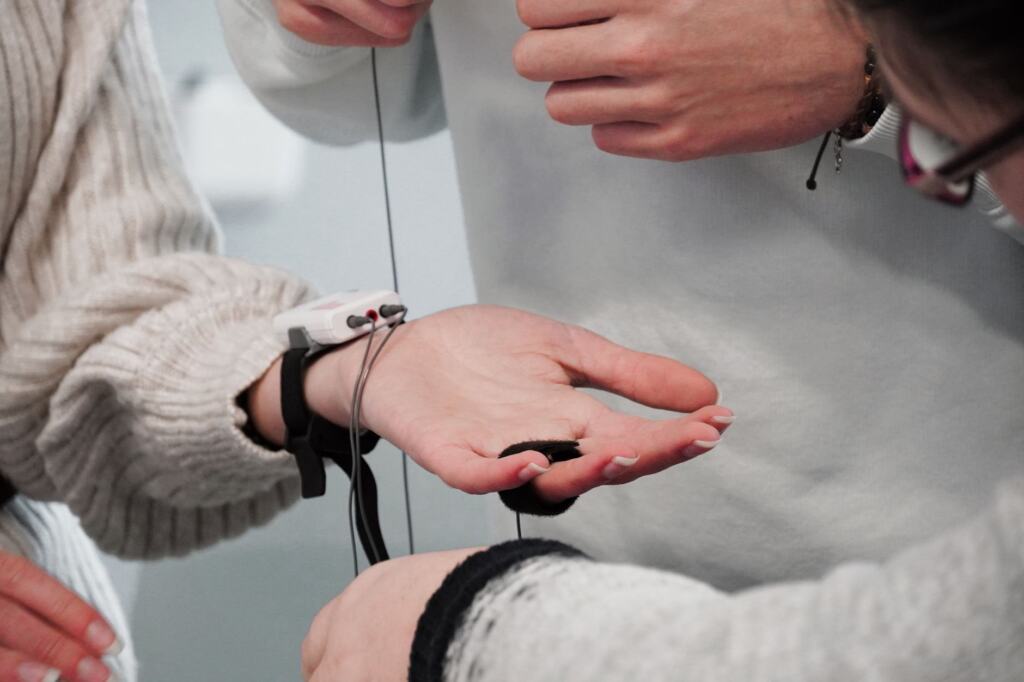
Rigid sensors on a watch back are constrained by shape. Flexible wearable sensors aim to follow the body’s contours so that contact with skin stays consistent, which matters because so many reading errors in the earlier sections began with poor contact. If you are evaluating a new device, ask what the flexible form actually improves: comfort, contact or the range of signals it can pick up.
Sweat and hormone chemistry
Several emerging devices try to read molecules rather than blood volume. A wearable lactate sensor targets a marker linked with exertion, and it is of most interest to athletes who want chemical context for fatigue beyond heart rate. A wearable cortisol sensor goes after a stress hormone, which is a much harder target than pulse because the signal has to come from chemistry rather than optics. A continuous ketone monitor applies continuous sensing to a metabolic marker, and it matters most to people who track diet or metabolic state closely.
For all of these, treat marketing claims cautiously. The sensible questions are what molecule is measured, where on the body, and whether the manufacturer claims clinical use or only general wellness.
Sensing beneath the skin
Light only penetrates so far into tissue. A wearable ultrasound patch uses sound instead, which opens a route to information below the surface that an optical sensor cannot see. This is one of the clearest examples of a new physical principle, as opposed to a refinement of an existing one.
Sensors away from the wrist
Not every future health sensor will be worn. Smart toilet health monitoring places sensing in the home environment, so that measurements happen without any action from the user. For people who dislike wearing devices, this model of passive monitoring may suit better than another gadget on the body.
How to judge a new sensor claim
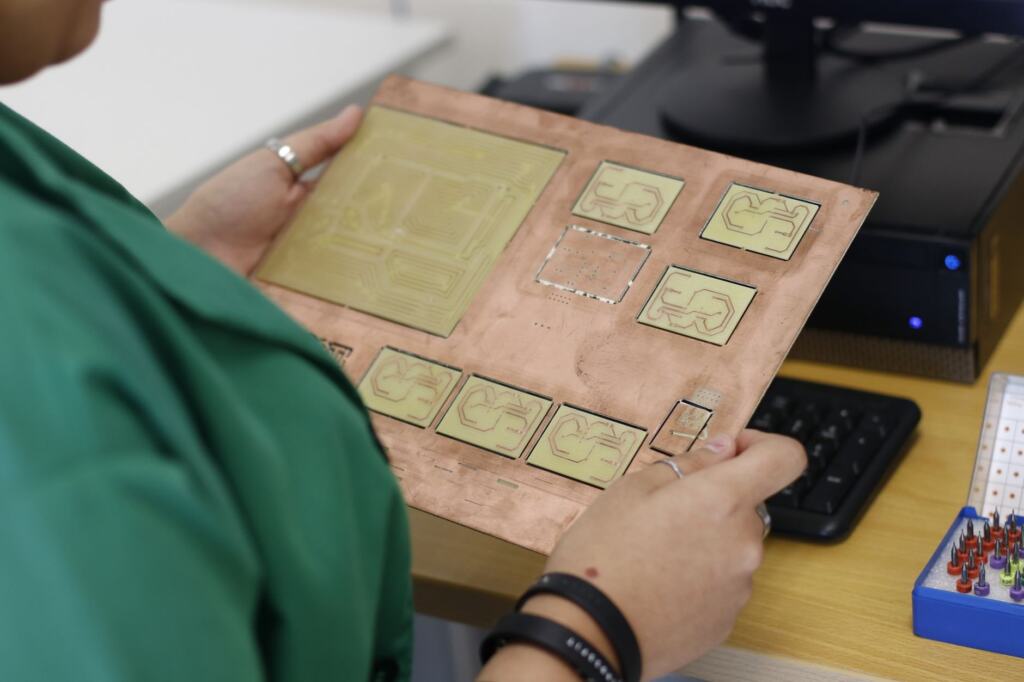
Start with the known limits from earlier in this guide. A credible new device should say what it measures, how it differs from the established reference method, and what it does not claim to do. A product that promises to replace a clinical test without saying how it was compared is not offering a solution. Check also whether it has been cleared by a regulator for the claim it makes. A wellness feature and a regulated medical function are different things, even when they run on the same hardware. Wait for independent comparison against a reference before changing any health decision.
Matching the sensor to your question
The most useful way to use a wrist sensor is to match it to a question it can answer. These pairings pull together the decisions above.
- “How is my day going?” The PPG watch is well suited to this question, since it is designed to be worn continuously and to report pulse trends.
- “What happened in that hard effort?” The watch gives an estimate. The EKG-based monitor gives the reference.
- “Is my blood oxygen low?” A wrist estimate is an indication, and a fingertip oximeter is the more precise tool.
- “Is something wrong with my heart rhythm?” An irregular pulse alert is a prompt for medical assessment. It is not the assessment itself.
- “Can it track a chemical in my body?” That needs a chemical sensor, which is a different device from the optical pulse sensor on the back of your watch.
Frequently asked questions
| Question | Answer |
|---|---|
| Why does my watch read low or late when my hands are cold? | Cold skin may cause blood flow to slow slightly, which can lead to lower or delayed heart rate readings, according to a smartwatch maker’s guide. Warming up before you check gives the sensor a stronger blood signal to read. |
| Do smartwatches use infrared light for heart rate? | Some high-end wearables also use infrared light for low-power, continuous monitoring, especially during sleep, according to the same guide. Green light remains the typical choice for daytime pulse readings, as described in the Royal Society of Chemistry feature. |
| Why are wearables adding more sensors? | The Royal Society of Chemistry notes that recent advances in battery technology have allowed for more sensors and a higher degree of accuracy in wearables. More sensing needs more power, so battery progress is what lets extra sensors run on a small device. |