Is there a smartwatch that monitors blood sugar? Not by itself: the FDA has not authorized any smartwatch or smart ring to measure glucose, though watches can display readings from an FDA-authorized continuous glucose monitor (CGM).
The practical split is simple: the CGM does the measuring and the watch is a screen. For the wider picture of what wrist sensors do well, start with the hub’s explanation of how do smartwatches measure heart rate, then come back here for the much harder problem of glucose.
Where the glucose sensor actually sits
A watch that shows a glucose number is relaying a measurement made elsewhere. Healthline’s overview of diabetes technology states that the smartwatch itself does not check blood sugar with a sensor. It displays data relayed from a CGM or an app. That is why Apple Watch and other smartwatches can show blood sugar and diabetes data without being glucose meters.
The same distinction answers whether a watch can measure glucose without a needle. The FDA says the smartwatches and smart rings that claim to do this do not directly test blood glucose levels. A physician quoted by Hartford HealthCare makes the same point about non-invasive monitors: they do not directly measure glucose and tend to be inaccurate. A needle-free number on a wrist is therefore an estimate of unknown quality, not a reading you can dose from.
Non-invasive glucose monitoring remains a research goal rather than a product category you can rely on. Understanding the CGM-to-watch chain shows what does work today.
How a CGM reaches your watch
Data usually travels in stages, and each stage affects what you see on the wrist.
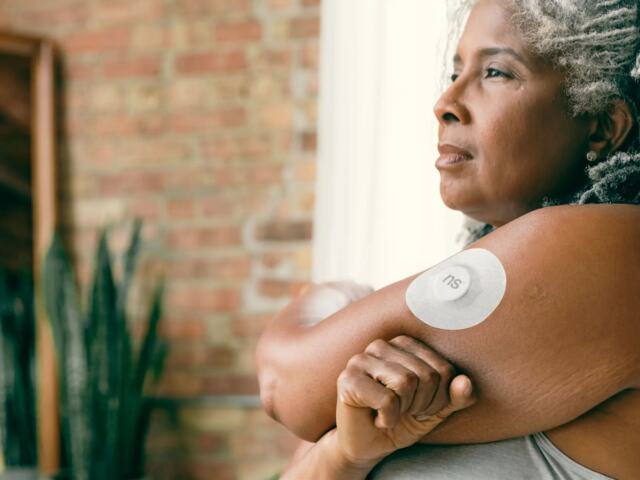
- Sensor to phone. The FreeStyle Libre 3 from Abbott transmits data every minute to a smartphone app on iOS and Android, with a Bluetooth range of up to 33 feet. Keep the phone within that range of the sensor.
- Phone to watch. Dexcom first enabled limited Apple Watch connectivity in 2015 with its G4 model, according to Healthline. The FDA gave the green light in July 2021 for real-time Dexcom data streaming to a third-party watch.
- Sensor straight to watch. The Dexcom G7 is the first Dexcom generation that allows direct-to-watch connectivity, with no phone as an intermediary.
- Alerts stay with the CGM app. Garmin intentionally does not add its own glucose alerts or alarms. Dexcom app alerts still reach the watch, so the alarm logic belongs to the CGM, not the watch brand.
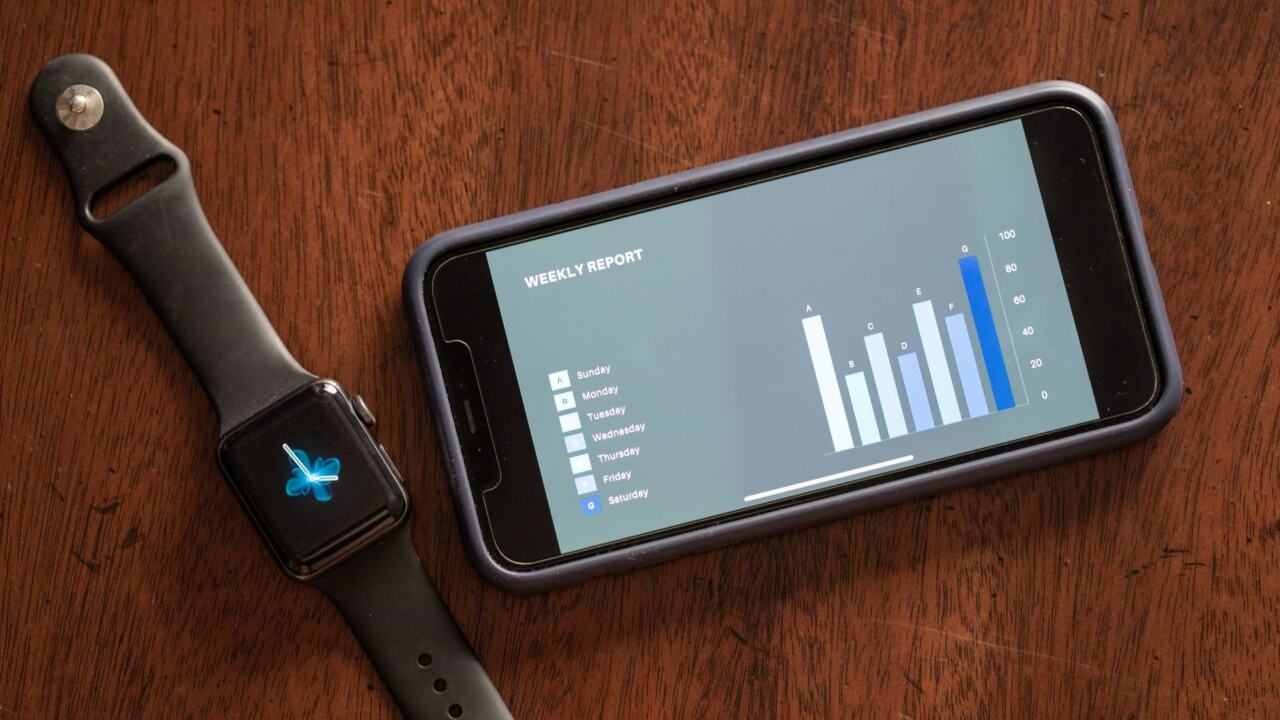
On the screen, the Dexcom G7 app works with Apple and Android watches and shows the current glucose number and trend arrow, plus graphs for 1-, 3-, 6-, and 24-hour periods. Abbott FreeStyle Libre and other CGMs can be used on various watches, including Apple, Samsung, Garmin and Galaxy models, sometimes through third-party apps. Samsung Galaxy Watch owners are therefore in the same position as Apple Watch owners: the watch can display CGM data, but the sensor on the arm produces it.
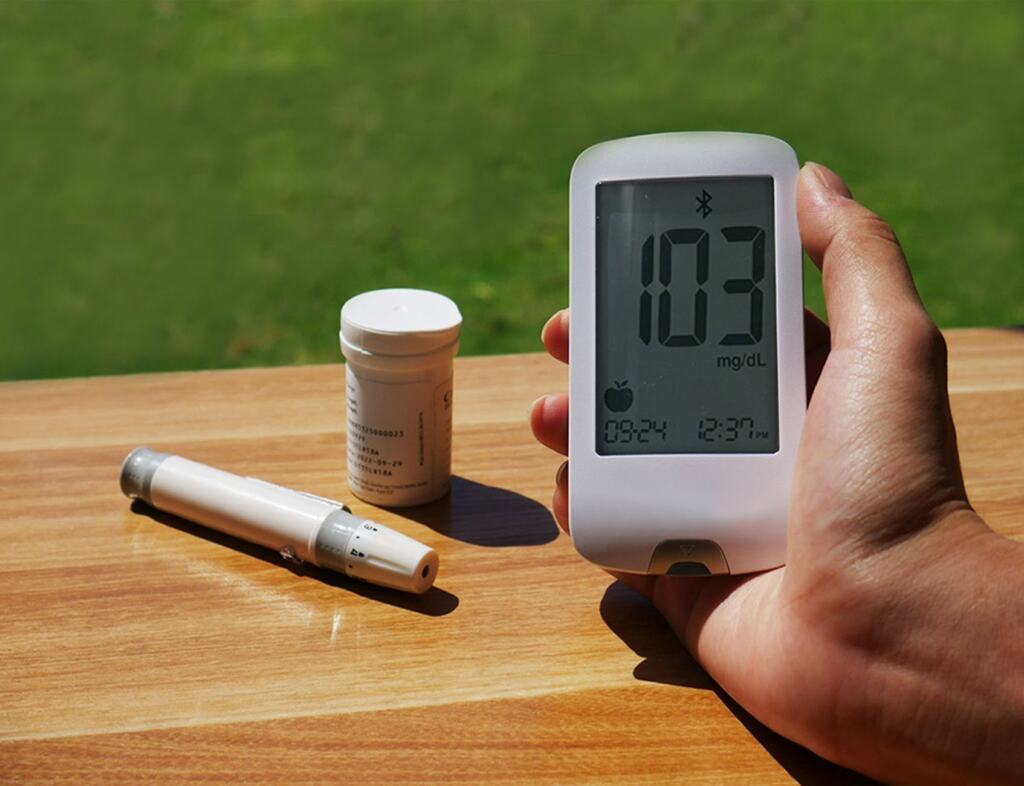
Before buying a watch for CGM display, check that the specific CGM app supports that watch and phone pairing. Direct-to-watch connection is a feature of particular CGM generations, so compatibility is the deciding factor, not the watch’s health-sensor marketing.
The FDA position on watch-only glucose claims
The FDA issued a safety communication on February 21, 2024 about smartwatches and smart rings that claim to measure blood glucose. Its core statements are direct:
- No authorization. The FDA has not authorized, cleared or approved any smartwatch or smart ring to measure or estimate blood glucose on its own, so non-invasive glucose monitoring in a watch has no FDA approval.
- No review. The safety and effectiveness of these devices have not been reviewed by the FDA.
- Wide market. The products are made by dozens of companies and sold under multiple brand names, so a different label does not mean a different regulatory status.
- Marketing claims. Sellers claim the devices measure glucose without finger pricks or skin piercing. That is a sales claim, not a verified capability.
The FDA also separates these products from watch apps that display data from FDA-authorized glucose measuring devices. A CGM app on a watch is a different thing from a watch claiming to be the sensor.
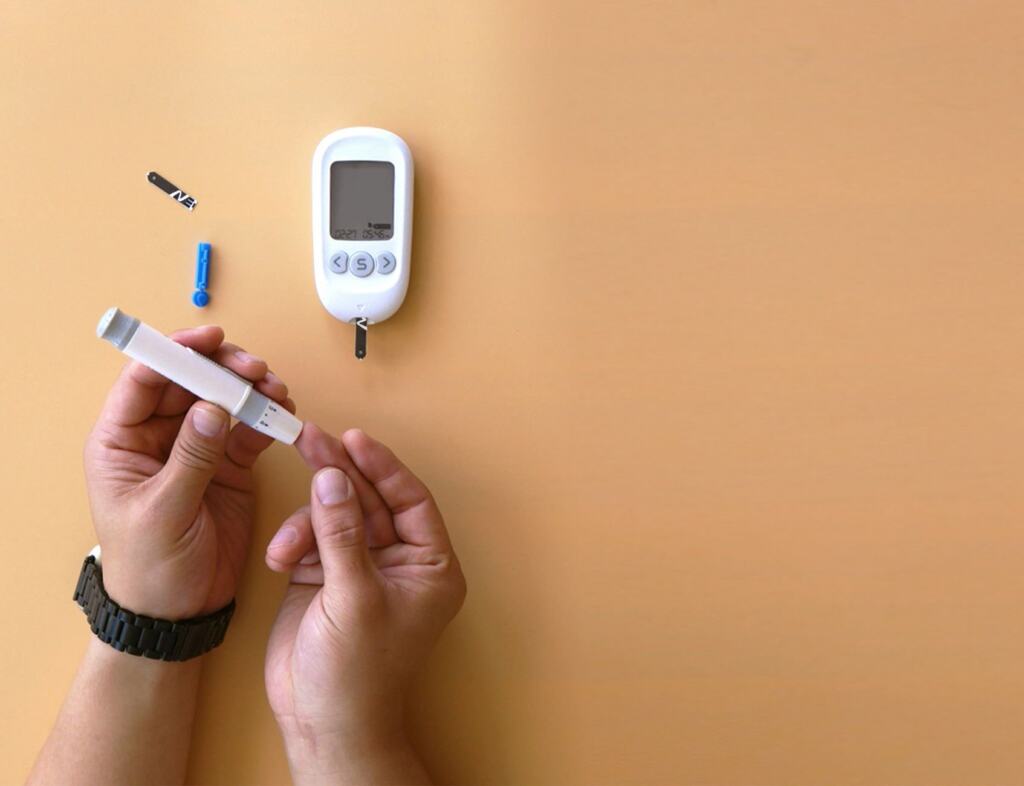
The risk is practical. The FDA warns that inaccurate glucose measurements can lead to errors in diabetes management, including a wrong insulin or medication dose. On trial status, the FDA’s statement gives no approval pathway or timeline. It says only that it will keep the public informed if significant new information becomes available. Healthline adds that clinical research does not specifically demonstrate benefits tied to smartwatch use in diabetes management, so treat a watch as a convenient display, not a proven clinical upgrade.
Watch, CGM or both: a quick comparison
| Option | What does the measuring | FDA position | Planning use |
|---|---|---|---|
| FDA-authorized CGM, readings shown on a watch | The CGM’s own sensor; the watch relays and displays | Watch apps showing data from authorized devices are treated as different from unauthorized watch glucose claims | Suits anyone who wants trends and alerts on the wrist; alerts still originate in the CGM app |
| Smartwatch or smart ring claiming needle-free glucose readings | Marketed as measuring without finger pricks; the FDA says there is no direct glucose test | Not authorized, cleared or approved; safety and effectiveness not reviewed | Not a basis for insulin or medication decisions |
| Apple Watch or Samsung Galaxy Watch as a display | Receives data from a CGM or app | Displays data from an authorized CGM rather than measuring glucose itself | Confirm that your CGM app supports the watch before buying |
Regulatory positions come from the FDA safety communication, and the watch-as-display role is described in Healthline’s diabetes technology overview.
Accuracy and cost
CGM accuracy is usually summarized by mean absolute relative difference (MARD). Breakthrough T1D describes MARD as a key metric that compares CGM values with an established blood glucose test, so a lower figure means closer agreement. Abbott reports a MARD of 7.9% for the FreeStyle Libre 3, which the FDA cleared in 2022 for people aged 4 and up with diabetes. That is a manufacturer-reported figure for one model. Do not read it as a benchmark for every CGM, and compare each model’s published accuracy data separately.
Watch-only estimates have no comparable validated accuracy figure to set beside it. That gap is the practical reason the FDA treats them differently from CGMs.
Cost is the other constraint. Hartford HealthCare notes that continuous glucose monitors have eased glucose checking but cost remains a limiting factor. A watch adds a further purchase on top of the CGM, and since the watch only displays data, it makes sense only if the wrist display solves a real problem, such as glancing at trends without pulling out a phone.
Choosing a setup
- If you manage diabetes with medication or insulin. Use an FDA-authorized CGM, or a standard blood glucose meter, as the source of truth, and add a compatible watch only for convenience. Discuss any change in monitoring with your clinician.
- If you are curious about glucose trends without a diagnosis. A watch cannot supply a glucose value. The FDA’s message is to avoid smartwatches and smart rings that claim to measure it, so a clinician is the right first conversation.
- If a product advertises needle-free glucose readings. Check whether the glucose data comes from an FDA-authorized CGM. If it comes from the watch’s own sensor, the FDA states it has not reviewed that claim.
If you want to see how a sensor turns a body signal into a number, What Is a Biosensor? A Clear, Practical Guide For 2026 – Bioconnected explains the principle. Other sensing routes, such as smart toilet health monitoring, take body data from entirely different samples.
Frequently asked questions
Does an Apple Watch or Samsung Galaxy Watch measure blood sugar?
No. Both can display glucose data from a paired CGM or app, but neither has its own glucose sensor.
Which Dexcom model can send readings to a watch without a phone?
The Dexcom G7, the first Dexcom generation with direct-to-watch connectivity. Earlier models relied on a phone as the intermediary.
What does MARD tell me about a CGM?
MARD compares CGM values with an established blood glucose test. A lower figure means closer agreement, but it describes the specific model and study behind it.
Will the FDA approve a watch-only glucose sensor soon?
No approval status is stated in the FDA’s communication. The notice adds that the agency will update the public if important new information about these devices emerges.
Do CGM alerts come from the watch or from the CGM app?
From the CGM app. Garmin, for example, intentionally adds no glucose alerts of its own, and Dexcom app alerts still reach the watch.