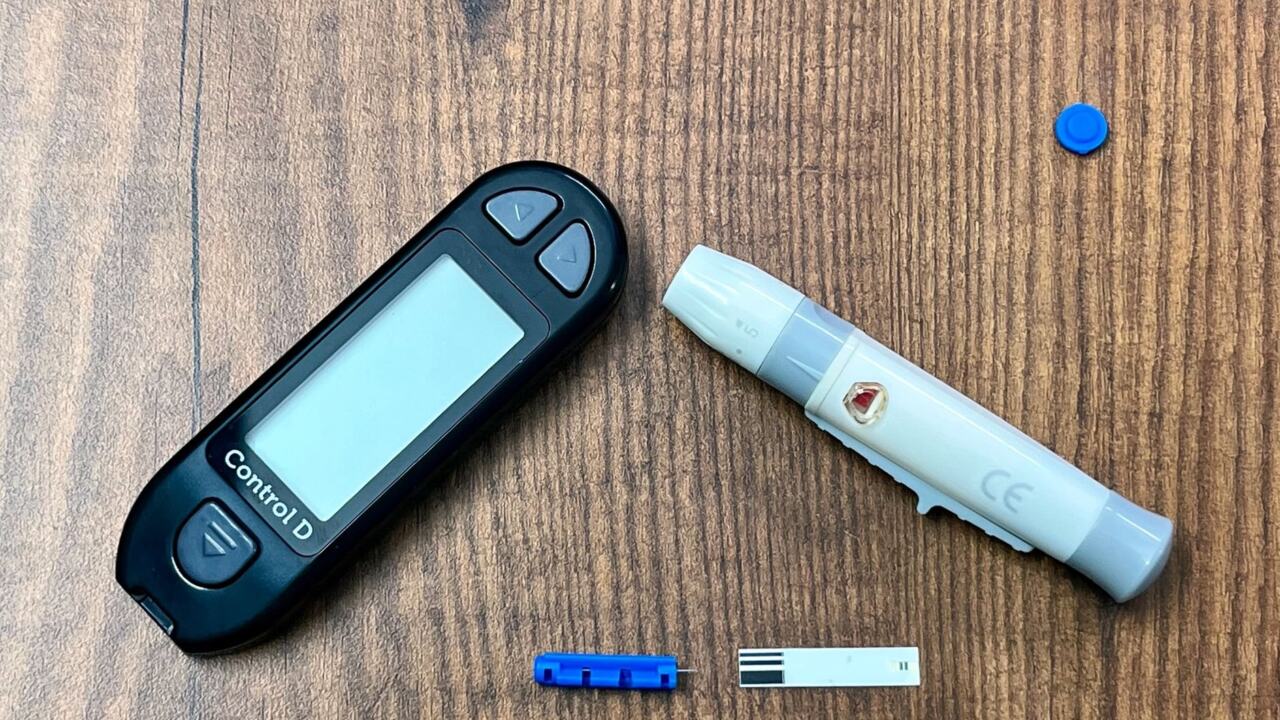
What is a biosensor? It is an analytical device that combines a biological component, which recognises a target, with a physicochemical detector that turns that recognition into a readable signal, as in a glucose meter.
The same recognise-convert-read chain runs from lab instruments to the sensors on your body. Readers who want a neighbouring example from wrist-worn devices can start with how do smartwatches measure heart rate. The rest of this guide follows the chain stage by stage and then connects it to wearables.
From sample to signal: how a biosensor works
A biosensor brings together a biological recognition element and a physicochemical transducer to detect a target analyte, as IGII’s overview of advanced biosensors describes it. Research institute imec adds that biosensors using bioreceptors, transducers and electronics determine the presence and/or amount of an analyte. They have existed for decades and are now moving from laboratories into devices. The chain has three stages.
- Recognition. The bioreceptor meets the target. Enzymes, antibodies, aptamers and nucleic acids all serve as bioreceptors, and each suits a different kind of target.
- Transduction. The transducer converts that biological event into a measurable physical signal. Which kind of transducer is used depends on the assay.
- Readout. Electronics process the signal and present it. In a wearable, that can include data compression and transmission, often via Bluetooth or NFC.
The third stage is what makes a biosensor useful rather than merely sensitive. According to a food science review of biosensors, the intensity of the signal output is proportional to the concentration of the analyte. That proportionality is why a calibrated device can report an amount rather than a simple yes or no.
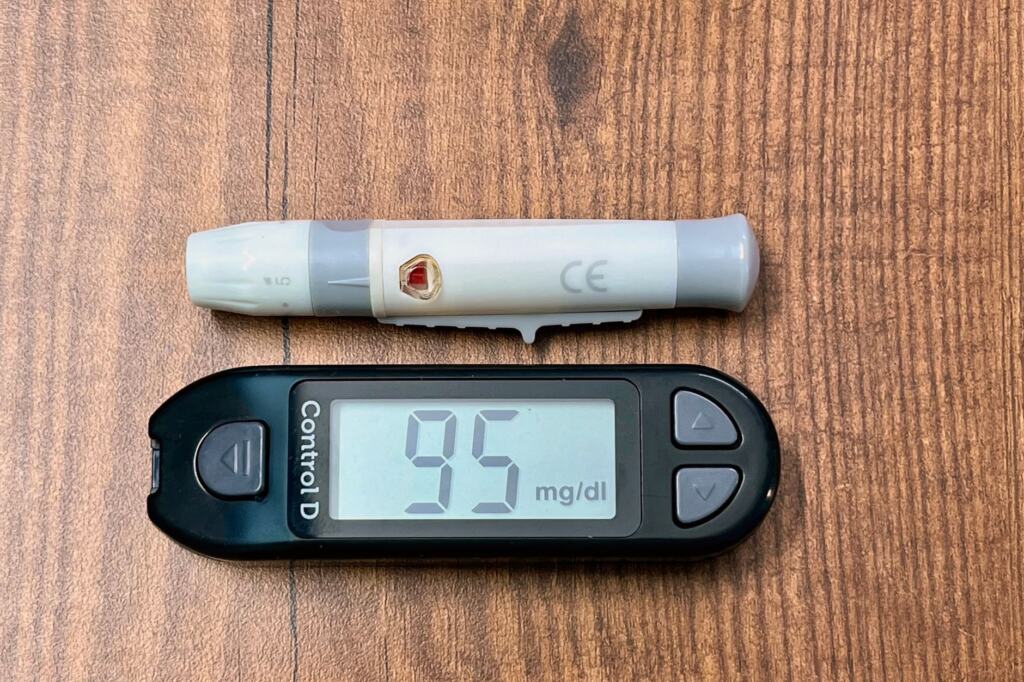
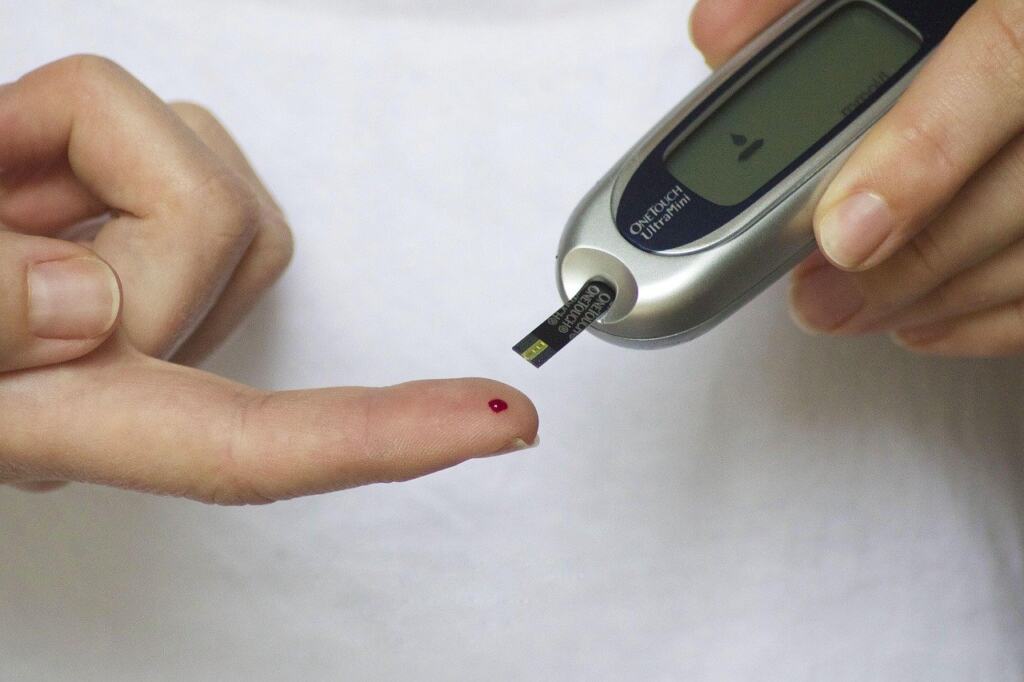
The glucose meter shows all three stages in one handheld unit. According to Talking Health Tech’s glossary, the biosensor reads the presence of glucose in a blood sample. That glossary names the glucose monitor as a well-known biosensor, used every day by people with diabetes. The next section looks at the parts that vary between designs.
Bioreceptors, transducers and examples
Two choices define most biosensors: what recognises the target and how that recognition becomes a signal. The table below sets out the main options and what each means for choosing or judging a device.
| Component | Variant | Detail | Planning use |
|---|---|---|---|
| Bioreceptor | Enzyme | Catalytic recognition, for example glucose oxidase | The basis of glucose sensing, so the most relevant to wearable glucose devices |
| Bioreceptor | Antibody | Named as an advanced bioreceptor alongside enzymes and aptamers | Look for it where a device targets a specific binding partner |
| Bioreceptor | Aptamer | Short single-stranded DNA or RNA, approximately 100 nucleotides or fewer | A compact, synthetic alternative to antibodies |
| Transducer | Electrochemical | One of the main transducer families | Common where compact, low-power electronics matter |
| Transducer | Piezoelectric | Responds to mass changes | Suits assays where binding adds measurable mass |
| Transducer | Optical | Fluorescence or surface plasmon resonance (SPR) | Suits assays read through light signals |
Bioreceptor and transducer options are drawn from IGII’s biosensor feature overview, and the aptamer size comes from a food science review of biosensors.
Biosensors are commonly classified by transduction type. A biosensor applications presentation lists electrochemical, optical, thermal and piezoelectric classes. SPR is worth singling out because, in the food science review’s words, it can determine the presence of a chemical with no need for labelled molecules. A label-free optical method removes one preparation step from the assay, which is part of its appeal.
Treat the bioreceptor and the transducer as separate decisions. The bioreceptor sets what the device can recognise, while the transducer shapes how fast, how cleanly and how compactly it can report. A device that pairs a good receptor with a poor transducer will still read badly.
Biosensors in wearables
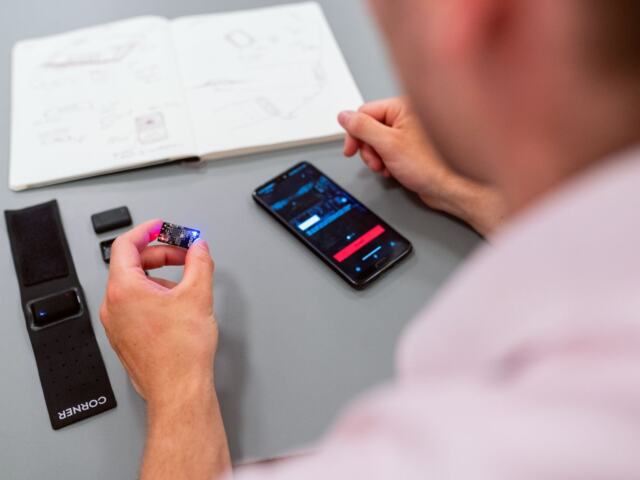
Biosensor technology reaches the body in several forms. imec lists point-of-care equipment on the body and wearables, and its page also covers devices inside the body. Wearable designs inherit the same recognise-convert-read chain, but they add a requirement that a one-off test never faces: staying useful over time.
Glucose: the example most readers know
Glucose is the clearest bridge between the principles above and consumer devices. A test-strip meter reads glucose in a blood sample, while inline glucose or lactate monitoring, according to IGII, improves patient experience and safety but demands real-time, low-maintenance platforms. That distinction explains why continuous glucose monitoring is a harder engineering problem than a single fingerstick reading. For the full mechanics, see How Continuous Glucose Monitors Work: A Clear, Practical Guide For 2026 – Bioconnected.
From sensor to phone
In a wearable, the readout stage includes wireless delivery. IGII notes that processed data is often compressed and transmitted via Bluetooth or NFC in wearable applications. When you see a wearable app screen, then, you are looking at the end of a chain whose first link is a biological recognition step on or in the body.
Judging wearable claims
Use the chain as a checklist when a product claims to measure a biological quantity. Ask what recognises the target, what transducer converts the recognition, and how the result reaches you. If a device has no clear answer to the first two questions, treat the claim cautiously. The question of whether a watch can track blood sugar without a needle is covered in Is There a Smartwatch That Monitors Blood Sugar? The 2026 Guide To Noninvasive Glucose Tracking – Bioconnected.
Performance metrics and what they mean
Transducer performance, according to IGII, directly affects the signal-to-noise ratio, detection limit, response time and overall reliability. Each of these translates into something a user can notice.
- Signal-to-noise ratio. How clearly the real signal stands out from background fluctuation. A weak ratio shows up as scattered or unstable readings.
- Detection limit. The lowest amount of target the sensor can pick out. It matters most when the target is scarce in the sample.
- Response time. How long the device takes to report after the target is present. Real-time wearable use depends on it.
- Reliability. Whether the device keeps behaving consistently, which is the metric inline monitoring leans on most.
A detection limit only has meaning for a specific target and assay. The food science review cites an aptamer-based sensor for progesterone with a detection limit of 100 pg/mL. Do not compare that figure with limits for other targets, because a sensor tuned for a scarce hormone and one tuned for a more abundant molecule solve different problems. When you compare devices, compare like with like: the same analyte, sample type and use setting.
Frequently asked questions
Is a glucose meter a biosensor?
Yes. Talking Health Tech’s glossary describes the glucose monitor as a well-known biosensor, and its biological component recognises glucose in a blood sample.
Who developed the first enzyme electrode?
According to a food science review of biosensors, the development of biosensors started with the invention of enzyme electrodes by Leland C. Clark in 1962.
How small can biosensor hardware get?
imec describes biochips that integrate up to 100 sensors per mm². It also notes that nanotechnology-based biosensors can need less than 1 µL per measurement, which reduces assay cost.