A fitness tracker counts as an FSA eligible fitness tracker only when a medical purpose backs the purchase. Buying one with an HRA, HSA or FSA requires a Letter of Medical Necessity from a healthcare provider, and the plan can still say no.
Documentation comes first and the device second, so settle the medical rationale before you pick the best health tracker for your situation. The sections below explain the rule, the letter, the purchase routes and which devices have the strongest case.
How the medical-purpose rule works
The rule that decides eligibility is simple: the device has to serve a documented health need, not general fitness. Android Police reports that purchasing a tracker with an HRA, HSA or FSA requires a Letter of Medical Necessity (LMN) from a healthcare provider. The same article notes that trackers such as Fitbit and Oura Ring can be essential for wellness journeys, and that they can also help people manage health issues. The hardware is identical in both cases. What changes is the purpose written down by a provider.
That distinction explains why two people can buy the same band and meet different outcomes. The letter, not the product listing, carries the case. A retailer calling a device “eligible” does not replace it.
Conditions that support a letter
According to Yahoo Finance, an LMN is usually tied to a specific condition, such as cardiovascular risk, pre-diabetes or sleep issues. The tracker then has to be a reasonable tool for monitoring that condition. A heart-rate and rhythm device fits a cardiovascular concern. Sleep and recovery data fit a sleep problem. Step counts alone, with no condition behind them, give a provider little to write.
Health history also affects how smooth the process is. The same Yahoo Finance piece says a Whoop band might be an easy approval for someone managing a cardiac condition, while a person with no relevant history can expect more pushback. If you have no condition that the device would monitor, a tracker is unlikely to be a good use of this route.
Devices that skip the letter
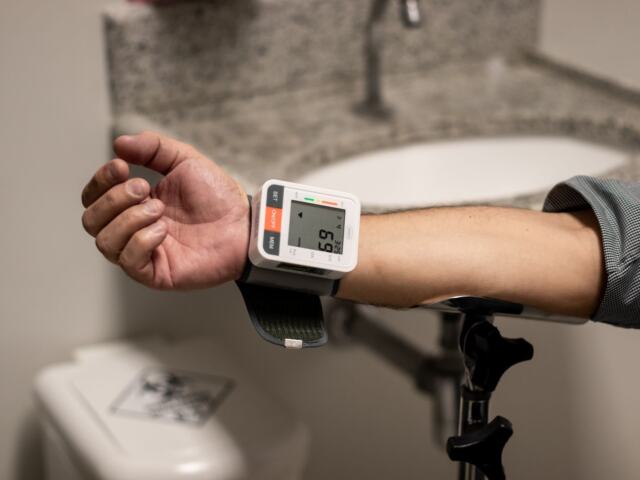
Some health monitors are treated differently from wearables. Android Police lists blood glucose and blood pressure monitors, EKGs and oxygen-level monitoring as eligible items without needing an LMN. If one reading is what you actually need, a dedicated monitor can be simpler than arguing for a general-purpose wrist device.
An approved letter is also not a promise. Yahoo Finance cautions that even a fully compliant LMN does not guarantee your plan will approve the claim. Treat the letter as strong supporting paperwork, not a ticket.
What a Letter of Medical Necessity contains
A useful LMN reads as a short clinical case for the purchase. Android Police describes the typical components, and the central one is a clear explanation of why the item is necessary for the patient’s health. In practice, a letter usually includes:
- Patient information: who the letter covers, so the administrator can match it to the account holder.
- The condition: the diagnosis or health concern the device relates to.
- The treatment context: how monitoring fits into the care plan.
- Why the item is necessary: the explanation that carries the most weight with a plan reviewer.
- The expected outcome: what the provider expects the device to help achieve.
- Prior treatments: what has already been tried.
- Provider information: details that let the administrator verify the author.
Before you ask for a letter, think about what the tracker would actually show your provider. A request that links a specific measurement, such as overnight recovery or heart rhythm, to a specific condition is easier to write and easier for a reviewer to follow than a request that only says “I want to be healthier.”
Getting the letter
There are two realistic ways to obtain an LMN, and the better one depends on whether you already have a provider who knows your condition.
- Your own provider: this suits people with a diagnosed condition and an existing care relationship. Ask for a letter that names the condition and explains why the tracker is needed, then keep a copy for your records.
- A third-party service at checkout: Yahoo Finance describes a “Pay With Truemed” option that appears at checkout on some merchants. You answer health questions, a provider is matched, and you might not even need to make a doctor’s appointment. This suits shoppers without a convenient provider, but the plan still makes the final call.
If your health history is thin, expect the third-party route to be no more persuasive to a plan than a weak letter from your own doctor. The letter helps only as much as the condition behind it.
Buying and claiming, step by step
Android Police describes two purchase routes for reimbursement: pay with your account card at checkout, or buy the tracker out of pocket and submit a claim afterward. The card route is faster when the merchant and plan accept it. The out-of-pocket route gives you more control over timing, so it suits anyone who wants the letter finished before spending anything. Either way, follow the same order:
- Obtain the LMN first. Having it in hand before you pay avoids a rejected card payment or a claim that cannot be supported.
- Choose the payment route. Use the account card at checkout, or pay yourself and claim later.
- Keep every record. Android Police advises keeping all receipts and any documentation related to the purchase and the medical necessity.
- Submit the letter. Send the LMN to your benefits administrator or the party managing your HSA or FSA, along with the receipt.
If the plan denies the claim, the records you kept are what you will use to ask again or to choose a different device. Keep them until the reimbursement is settled.
Which trackers qualify
No brand is eligible by default. Eligibility follows the individual’s documented need, and the table below shows where the strongest and weakest cases sit.
| Device or category | Eligibility position | Planning use |
|---|---|---|
| Fitbit, including the latest Fitbit Air | Possible in theory with FSA or HSA funds, conditional on documentation | Go in with an LMN tied to a condition, not a wellness goal. |
| Whoop, Amazfit Helio Strap, Oura | Can usually be justified around sleep quality or recovery tied to a chronic condition | Strongest case for sleep or recovery problems; easier approval with a cardiac condition. |
| Garmin watches | Not listed as eligible; certain Garmin heart rate monitors are, such as the HRM-Fit heart rate monitor for women | If you want Garmin hardware, a heart rate monitor has a stronger case than a watch. |
| Blood glucose and blood pressure monitors, EKGs, oxygen-level monitoring | Eligible without needing an LMN | Best fit when you need one specific reading. |
Figures and eligibility positions above come from Yahoo Finance and Android Police.
Fitbit is the most common starting point, and the in-theory wording matters. Funds can be used, but the purchase still depends on the paperwork described above. Recovery-focused bands have a clearer route when sleep quality or recovery is tied to a chronic condition, since that is the purpose the letter can state. Garmin is the exception to watch: Yahoo Finance says no Garmin watches are HSA/FSA-eligible, though the HRM-Fit heart rate monitor is listed.
Plan type matters too. Android Police notes that fitness trackers are not eligible for reimbursement with a dependent care FSA or a limited-purpose FSA, so confirm which kind of account you hold before you shop.
Choosing a device that fits the letter
Pick the tracker that matches the condition on the letter, not the one with the most features. A provider who writes about cardiac monitoring will have difficulty supporting a device chosen mainly for its sleep-coaching app, and the reverse is also true.
- Cardiac or heart-rhythm concern: a heart-focused device or a Whoop-style band is the easiest case to make, based on the approval pattern Yahoo Finance describes.
- Sleep or recovery issue: Whoop, Amazfit Helio Strap and Oura are the devices Yahoo Finance says can usually be justified here.
- A single measurement need: a blood pressure or blood glucose monitor, or other EKG and oxygen-level devices, can skip the letter entirely.
- No relevant condition: wait. With nothing for the device to monitor, a claim is likely to meet resistance, and paying out of pocket may be the honest choice.
Related purchases follow the same logic. Parents weighing a device for a child can compare options in Best Fitness Tracker For Kids: A Parent’s Guide To Safe, Fun Activity Tracking In 2026 – Bioconnected, though any letter has to be written for the person who will use the device. If you are also considering other home health devices, Best Smart Scale 2026: Accurate, Insightful Choices For Every Goal – Bioconnected covers body-composition scales, a separate purchase with its own documentation question.
Frequently asked questions
Is a fitness tracker FSA eligible?
Only conditionally. It generally needs a provider’s letter linking it to a medical need, and the plan decides whether to reimburse.
Does a limited-purpose or dependent care FSA cover a tracker?
No. Android Police says fitness trackers are not eligible for reimbursement with a dependent care FSA or a limited-purpose FSA.
Can one letter cover several devices?
Not safely. Yahoo Finance notes that an LMN only covers you personally, for a specific product from a specific merchant, so a different device or seller needs its own documentation.
Do I always need a doctor’s appointment to get a letter?
Not necessarily. A third-party provider matched after you answer health questions at checkout may remove the need for an appointment, according to Yahoo Finance.