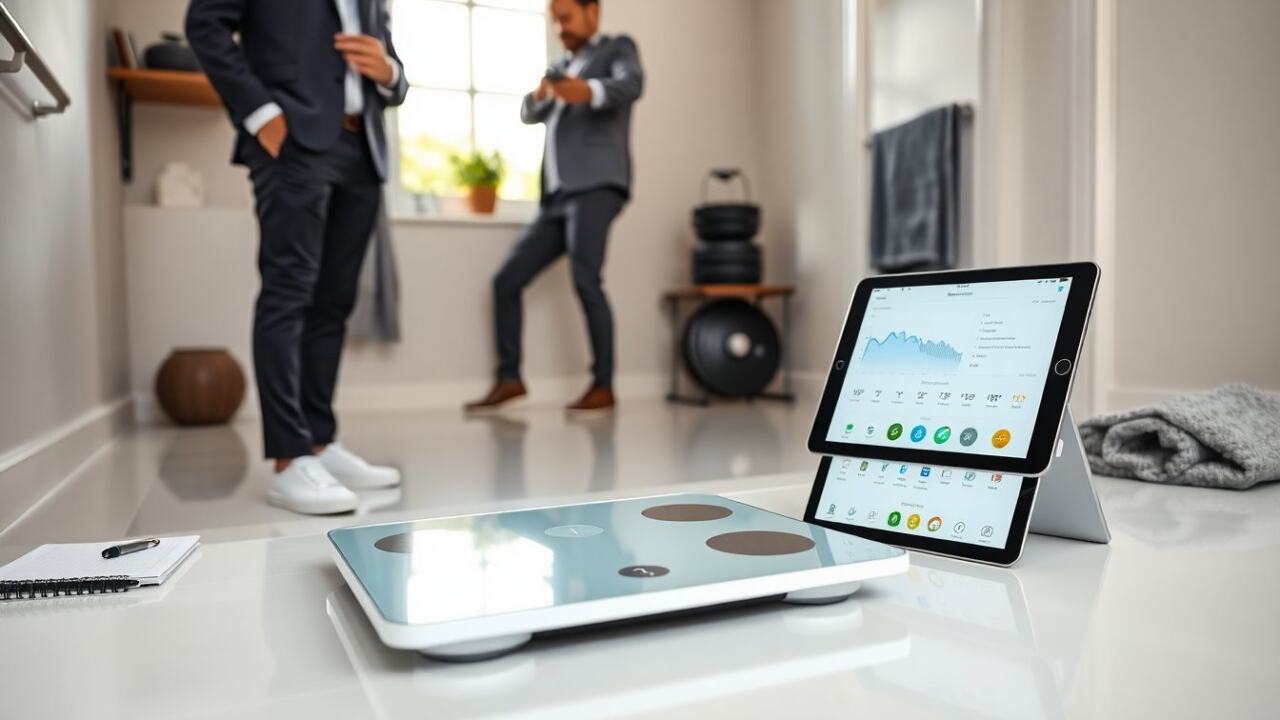
The best smart scale helps users track weight and body metrics with ease. This guide shows how the best smart scale performs in accuracy, app support, and privacy. It highlights clear test methods and top choices for everyday users, athletes, and budget buyers. Readers get direct guidance to pick a best smart scale that fits their needs.
Key Takeaways
- The best smart scale provides accurate measurements verified by calibrated tests and consistent body-fat trends for reliable tracking.
- Choosing a scale with a user-friendly app that offers data export and third-party integrations enhances the tracking experience and control.
- Privacy features like local-only data storage and clear opt-out options are crucial when selecting the best smart scale.
- Top smart scales balance measurement quality, app functions, and price to cater to daily users, athletes, or budget-conscious buyers.
- Battery life and long-term reliability should be considered alongside sensor quality and calibration when picking the best smart scale.
How We Tested Smart Scales And What Really Matters
The testing team weighed each smart scale against the same calibrated weight plates. They recorded five repeated measurements and compared them to a laboratory scale. They measured stability, step response, and repeatability. They tested body-fat estimates against skinfold calipers and DEXA results where available. They installed companion apps and checked sync reliability, data export, and third-party integrations. They reviewed privacy policies and looked for local-only storage or clear opt-out choices. They rated battery life under daily use. They scored each model for accuracy, metric quality, app experience, and data control. These scores determined the best smart scale in each category.
Beyond single-number accuracy we also looked at how scales behave in real-world conditions: morning versus evening readings, different floor surfaces, and after repositioning. Small differences in posture, foot placement, or surface can change readings; the best smart scale minimizes those effects. We also tracked how quickly a scale stabilizes and whether it reports a plausible number on consecutive measurements. For body-composition metrics, consistency over weeks is often more meaningful than any single reading—so trend stability was a key part of our evaluation.
We evaluated app features using common user tasks: adding multiple profiles, viewing historical trends, exporting a CSV, and connecting to fitness platforms. Installation and daily use were timed and noted for usability issues like confusing onboarding, ambiguous unit settings, or weak Bluetooth/Wi‑Fi pairing. Battery tests simulated typical household use: daily weigh-ins for two adults, occasional app syncs, and firmware update attempts. Finally, we audited privacy notices for clear language on data retention, third-party sharing, and account control options; scales that bury or omit these details scored lower.
Top Picks: Best Smart Scales For Different Needs
This section lists top picks across use cases. Each pick balances measurement quality, app features, and price. The picks aim to match common goals: daily weight tracking, athlete metrics, and tight budgets. Each pick names key strengths and the likely buyer. The list highlights which best smart scale fits users who want accuracy, expanded body composition data, or simple core metrics with a low price.
For daily weight tracking: Choose a scale that prioritizes precise weight readings, straightforward app charts, and multi-user support. Look for clear onboarding, automatic user recognition, and easy export options so you can review long-term trends or share them with a coach or clinician. These scales work well for users who primarily care about weight and simple trend monitoring.
For athletes and data-focused users: The best smart scale in this category reports expanded metrics—muscle mass, visceral fat estimates, bone mass, and segmental analysis—while exposing confidence or variance indicators. Athletes should value repeatability and the ability to sync with training platforms. While no consumer scale replaces lab testing, good models provide consistent relative changes and allow export of raw readings for deeper analysis.
For budget-conscious buyers: Affordable models often provide accurate weight readings but fewer body-composition metrics or simpler apps. When choosing a low-cost option, prioritize hardware quality (solid metal load cells versus light plastic parts), reliable Bluetooth connectivity, and a clear privacy policy. A cheaper scale that is stable and consistent can still be the best smart scale for someone who only needs weight tracking and an occasional body-fat estimate.
Additional scenarios to consider: households with many users should prioritize profile limits and automatic recognition; people tracking medical conditions should look for exportable, timestamped readings and clear terms about data ownership; those worried about privacy should favor models that allow local-only operation or anonymous accounts. These real-world considerations often matter more than a long feature list.
Key Features To Look For (Accuracy, Metrics, App, And Privacy)
Buyers should check sensor count, calibration, and repeatability for accuracy. They should prefer scales that use multiple load cells and report variance across repeated measures. They should pick models that show consistent body-fat trends, not wild swings. Buyers should evaluate app clarity, export options, and third-party integrations for data use. They should confirm how the maker stores data and whether users can delete or export data. They should check for local-only modes or clear opt-out choices. Battery life matters for convenience. They should weigh price against long-term reliability. These features help a buyer choose the best smart scale for their goals.
Accuracy: Look for scales that disclose how they calibrate and whether they use four or more load cells. Test for consistency by taking consecutive measurements and checking variance. Consider how a scale performs on different floor types—tile, wood, and carpet can all affect readings. A transparent manufacturer will provide notes on calibration and recommended placement.
Metrics: Understand what each metric actually represents and how it is calculated. Consumer smart scales estimate body composition using bioelectrical impedance; readings can be influenced by hydration, recent exercise, and meal timing. Prioritize scales that report a clear set of core metrics (weight, BMI, body fat percentage) and allow you to hide or reorder less reliable estimates. For advanced users, look for models that offer segmental data or raw impedance values for external analysis.
App and integrations: A well-designed app should make it easy to review trends, export data, and manage multiple users. Look for straightforward graphing, custom date ranges, and the ability to export CSV files. Integration with third-party platforms (for example, widely used fitness or health-tracking services) is useful if you want to merge scale data with workouts, sleep, or nutrition logs. Check whether the app supports firmware updates and whether updates are automatic or manual.
Privacy and data control: Read the privacy policy for clear statements about data retention, sharing with third parties, and account deletion. Prefer devices that allow anonymous or local-only operation if you do not want cloud storage. Ensure the app gives you simple ways to delete your data and revoke access. If data is shared with third parties for analytics or ads, that should be clearly disclosed and opt-in rather than the default.
Practical buying checklist: 1) Confirm weight accuracy and repeatability via reviews or in-store testing. 2) Verify app features you need (export, multi-user, integrations). 3) Check battery type and expected life. 4) Read the privacy policy for data controls. 5) Consider build quality and warranty length. Following this checklist will help you choose the best smart scale for your situation rather than picking solely on price or feature count.