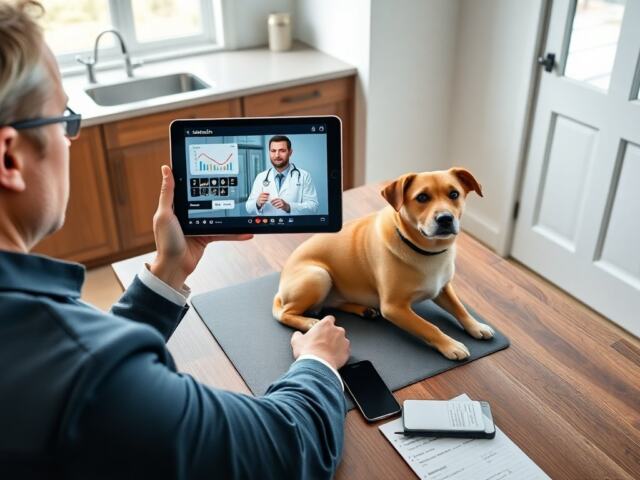
The difference between telehealth and telemedicine is scope: telehealth is the broader term for care delivered at a distance through technology, while telemedicine covers only the remote delivery of clinical care.
Federal sources often treat the words as interchangeable, so the label matters less than the service you receive and how your payer covers it. This guide sits within our wider digital health coverage and shows where wearable and home-monitoring data fit in each term.
How the two terms relate
Telehealth is the umbrella and telemedicine is the clinical part under it. Harvard Health describes telehealth as care delivered at a distance through technology. It says this definition is broader than telemedicine, which only includes the remote delivery of health care. Telehealth also covers the training and continuing education of medical professionals.
Official usage is looser than that strict split. The HHS Office of the National Coordinator for Health IT says telehealth, sometimes called telemedicine, lets people see their provider without going to a physical office. In a March 17, 2020 fact sheet, CMS said telehealth, telemedicine and related terms generally refer to the exchange of medical information from one site to another to improve health. When a government page uses either word, read the surrounding detail to see which services it means.
Telemedicine: the clinical subset
Telemedicine is clinical care with a clinician at one site and the patient at another. Alabama’s definition, as compiled by the CCHP definitions page, calls it a form of telehealth in which a physician at a distant site provides medical services to a patient at an originating site. Visits can be done with a computer, tablet or smartphone, according to healthit.gov.
Remote care has limits. Harvard Health notes that not every type of visit can be done remotely, and imaging and blood work still need an office visit. One telemedicine provider’s chief executive says telemedicine augments and enhances, not replaces, in-person care. That is a sensible way to plan: use it for what can be assessed remotely and keep in-person follow-up for the rest.
Telehealth beyond the visit
Telehealth reaches past the consultation. The CCHP definitions page says telehealth includes technologies such as telephones, email systems and remote patient monitoring devices that collect and transmit patient data. Arizona’s definition lists asynchronous (store-and-forward) care, remote patient monitoring, teledentistry and real-time telemedicine as the routes telehealth services can take. Professional training sits here too, which is why a hospital’s staff education program can be telehealth without being telemedicine.
How remote care is delivered
The delivery mode, more than the word, shapes what the patient experiences and what a clinician can do with the information. Harvard Health groups telehealth into these modes:
- Synchronous care: the doctor communicates with the patient in real time by computer or telephone. This is the mode most people picture as a telemedicine visit.
- Asynchronous care: recorded data is shared and reviewed later. It suits information that does not need an immediate conversation.
- Remote patient monitoring: measurements such as weight or blood pressure are sent to the health care provider.
Real-time visits depend on a reliable video platform, and the security of personal health data transmitted electronically is a concern Harvard Health flags. Our guide to Telehealth Video Conferencing Software: How To Choose Secure, Scalable Platforms That Improve Care In 2026 – Bioconnected is the next step for anyone choosing the technology behind these visits.

Side-by-side comparison
| Feature | Telehealth | Telemedicine | Planning use |
|---|---|---|---|
| Scope | Care delivered at a distance through technology | Only the remote delivery of health care | Say “telemedicine” for clinician-to-patient care and “telehealth” for a wider program. |
| Professional training | Includes training and continuing education of medical professionals | Not part of the clinical-delivery definition | Count staff education as telehealth when describing a service. |
| Delivery modes | Synchronous, asynchronous and remote patient monitoring | Real-time clinical care, such as a physician at a distant site serving a patient at an originating site (Alabama’s wording) | Match the mode to the need: a conversation, a data review, or ongoing readings. |
| Remote patient monitoring | Listed as a telehealth service route | Listed alongside telemedicine, not inside it, in Arizona’s definition | Describe monitoring programs as telehealth unless a live clinical consultation is involved. |
Definitions in the table draw on Harvard Health and the state definitions compiled on the CCHP definitions page.
Where remote patient monitoring and wearable data fit
Remote patient monitoring belongs to telehealth, not to a single telemedicine visit. Harvard Health defines it as measurements such as weight or blood pressure sent to the health care provider, and says readings including weight, blood pressure, heart rate and blood sugar can be recorded manually or through a wearable device and sent to your doctor. The CCHP definitions page puts remote patient monitoring devices inside telehealth, and Arizona lists monitoring as its own route beside real-time telemedicine.
In practice a wearable feeds both. During a live video visit, a clinician can discuss readings you have collected. Between visits, the same device sends data without a conversation. Before a virtual visit, confirm how your clinic wants the data, whether manually entered or sent from the device, so the readings arrive in a form the clinician can use. Because personal health data transmitted electronically raises security concerns, ask the clinic which channel it prefers rather than emailing readings from an unsecured app.

Medicare, CMS and insurance coverage
Coverage turns on the specific service and the payer, not on whether a page says telehealth or telemedicine. The strongest official detail comes from CMS and Medicare, and the details below are the ones its documents support.
- Historical limits: before the March 2020 waiver, Medicare could only pay for telehealth on a limited basis, such as in designated rural areas.
- Technology during the waiver: the provider had to use an interactive audio and video system permitting real-time communication with the patient at home.
- Virtual check-ins: the patient had to verbally consent, and the check-in could not relate to a visit in the prior 7 days or lead to one within 24 hours.
- Cost-sharing: Medicare coinsurance and the deductible would generally apply to these services during the emergency waiver.
That fact sheet reflects the rules when it was published, so check current Medicare rules with CMS before relying on it. For ongoing information, healthit.gov notes that CMS maintains information about telehealth physician fee schedules and a Medicare Telehealth Trends dataset.
Remote monitoring needs particular care. The CCHP definitions page reports CMS’s longstanding interpretation that remote monitoring and remote interpretation of diagnostic tests are not included in the statutory definition of Medicare telehealth services. Do not assume Medicare’s telehealth rules apply to a monitoring program. For private plans, Harvard Health warns that some telehealth services may not be fully covered, leading to out-of-pocket costs. Ask your insurer about the specific service before booking.
Adoption and what it means
Remote care is now mainstream in US health systems. Harvard Health reports that 76% of US hospitals connect doctors and patients remotely via telehealth, up from 35% a decade earlier. It also cites a survey in which one in four Americans over age 50 had a virtual health care visit in the first three months of the pandemic, up from 4% the year before.
Widespread adoption makes the vocabulary more practical. A clinic may offer a video visit, a patient portal and a monitoring program under one telehealth banner, and each can carry different coverage and data-handling expectations.
Choosing the right service
Start from the task, not the term. These pointers help match the need to the service:
- You need a diagnosis or treatment discussion: book a real-time visit. It is the clinical, telemedicine-style option, and our guide to What Is a Telehealth Appointment? A Clear Guide to Virtual Care in 2026 – Bioconnected explains what to expect.
- You manage a chronic condition: ask whether the clinic runs remote monitoring, and which device readings it accepts.
- You need imaging or blood work: plan an office visit, since those cannot be done remotely.
- You are running a program or clinic: classify each activity (visit, monitoring, staff education) separately, because definitions and payer treatment differ across them.
Frequently asked questions
Is telehealth only video calls?
No. Telehealth includes telephones, email systems and remote patient monitoring devices, along with asynchronous care in which recorded data is reviewed later.
Does Medicare require video for a virtual visit?
Under the March 2020 emergency waiver, CMS required an interactive audio and video system permitting real-time communication. Check current CMS guidance, since that fact sheet reflects the rules at that date.
Can telemedicine replace an in-person appointment?
Not for everything. Imaging and blood work need an office visit, and providers describe telemedicine as supplementing in-person care.
Is it safe to send wearable readings to my doctor?
Harvard Health says the security of personal health data sent electronically is a concern. Use the channel your clinic recommends instead of improvising.