
Your watch flags a middle zone mid-run and you wonder whether that is good. So, what are heart rate zones? They are bands of beats per minute that label effort, and they only work if the maximum heart rate behind them is realistic.
Treat any formula-based number as a starting point and adjust it by feel. If you are still setting up a device, our guide on how to use a fitness tracker covers the basics before you tune your zones.
What heart rate zones measure
Heart rate zones are ranges of beats per minute, each tied to a level of effort. Myzone defines five zones as percentages of maximum heart rate, and its device links each one to effort points. In its colour scheme the bands run like this:

- Grey, 50–59%: the lightest band, suited to easy movement.
- Blue, 60–69%: steady aerobic work.
- Green, 70–79%: a firmer aerobic effort.
- Yellow, 80–89%: hard work, best used in planned doses.
- Red, 90–100%: the top band, for short bursts only.
Other schemes draw the lines in slightly different places. NordicTrack puts Zone 2 at 60–70% of maximum heart rate and describes it as aerobic base work that is primarily fat oxidation. VO2 Master adds that zone ranges overlap between people, because each person’s thresholds sit at a different point relative to their maximum. It also describes Zone 5 as an all-out effort sustainable only in short bursts, up to 5 minutes at 90–100% of maximum heart rate.
Feel gives a useful cross-check on the numbers. NASM describes Zone 2 as the range where you can still talk, breathe steadily and keep moving for a long time without feeling wiped out. It places Zone 3 between comfort and challenge. Use the percentages as a map and the talk test as the sanity check.
Common misunderstandings, side by side
Most zone mistakes come from treating an estimate as a fact or one zone as the whole plan. The table sets each belief against what the evidence supports.
| Common belief | What the evidence supports | Planning use |
|---|---|---|
| 220 minus age gives my true maximum heart rate. | NASM notes this estimate can be off by 10 beats per minute or more for some people. | Treat zones built on it as provisional and check them against effort. |
| Only the fat-burn zone counts. | Myzone calls its blue and green bands ideal for fat burn and sustainable fitness. NASM’s sample week still mixes strength work, intervals and easy days. | Build most sessions in the easier aerobic zones, then add structured harder work. |
| Harder is always better. | Myzone warns that too much time in the red zone can lead to overtraining. | Keep the top zone for short, planned bursts. |
| Zone 3 is a safe middle ground for every session. | NASM describes Zone 3 as sitting between comfort and challenge, between Zone 2 aerobic cruising and Zone 4 threshold work. | Use it on purpose, not by default. |
Figures above come from NASM and Myzone.
Why too much Zone 3 can undermine a plan
Zone 3 is not forbidden. It sits between easy aerobic work and threshold work, and NASM’s sample week uses Zone 3 and Zone 4 intervals as a deliberate session. The trouble is making it the default. This is a practical judgement rather than a measured finding: a pace that feels comfortably hard is easy to drift into on days meant to be easy, and it is not hard enough to count as a proper quality session.
The fix is separation. Keep easy days in Zone 1 or Zone 2, and make hard days clearly hard in Zone 3 and Zone 4 intervals. If your average heart rate lands in the middle on most days, slow down on the easy ones.
Calculating your zones: maximum heart rate and heart rate reserve
Estimating maximum heart rate
The quick route is 220 minus age. It is easy to use, but NASM cautions it can be off by 10 beats per minute or more for some people. That error shifts every zone boundary built on it. Use a formula only until you have a better number, such as the highest reading from a hard, well-warmed-up effort.
Heart rate reserve
The Karvonen heart rate reserve method uses both maximum and resting heart rate. NASM writes it as target heart rate = (HRmax − HRrest) × intensity % + HRrest, and says it gives a better picture of true working intensity. It suits you if you can measure your resting rate consistently, for example first thing in the morning, and it responds as your fitness changes.
Testing instead of estimating
VO2 Master argues that training zones should come from individual ventilatory thresholds, VT1 and VT2, measured during a VO2 max test. That is the most personal route, and it is worth it if you train seriously or your estimated zones never match how sessions feel. Our guide to VO2 Max: How To Measure It Accurately — A Practical 2026 Guide For Runners And Cyclists – Bioconnected explains the measurement options. Average VO2 Max: What Numbers Mean For Your Fitness In 2026 – Bioconnected helps you read the result once you have it.
Setting up zones on a Garmin, Apple Watch or other wearable
Fitness trackers from Garmin and Apple measure heart rate during activity, according to VO2 Master, and most watches let you view effort by zone. Menu names differ by brand and model, so follow your watch maker’s own instructions for the exact screens. The sequence below holds across devices.
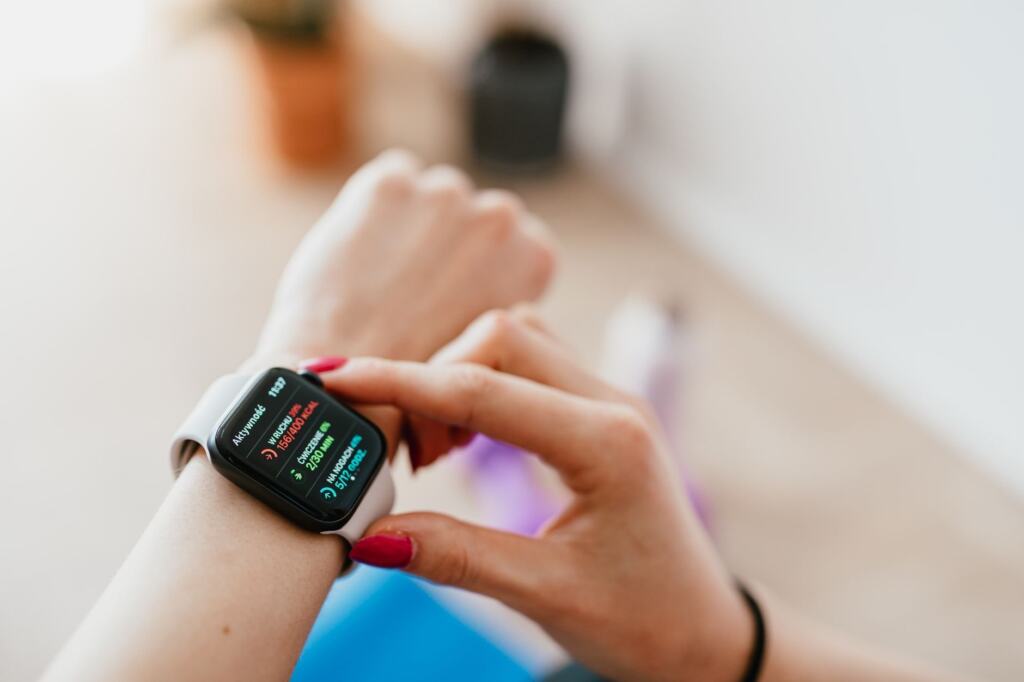
- Enter your best maximum heart rate. Use a measured value if you have one. Otherwise accept a formula estimate and treat it as provisional.
- Choose the calculation method. If your watch offers heart rate reserve as well as percent of maximum, reserve is the better choice once your resting heart rate is reliable.
- Read the zone boundaries. Confirm they match the scheme you plan to follow, since brands label and split zones differently.
- Use the live display. Myzone, for instance, shows your current zone in real time in its app, so you can adjust pace while the session is under way.
- Review after a few weeks. Some systems adjust on their own. Myzone says its device recalibrates if you reach 100% too often during workouts.
Turning zones into a weekly plan
A weekly plan decides which sessions are easy and which are hard, then holds you to it. NASM’s sample blended week runs in this order:
- A steady Zone 2 session.
- Strength training.
- Zone 3 and Zone 4 intervals.
- An easy day.
- A longer Zone 2 session.
Treat that as a template, not a prescription. A beginner can keep the pattern and swap the interval day for an easier Zone 2 session until the aerobic base feels comfortable. Someone with a base already can keep the intervals but should still protect the easy days.
Which zone is best for fat burning?
The easier aerobic zone is the best match. NordicTrack describes Zone 2 as primarily fat oxidation at 60–70% of maximum heart rate, and Myzone’s blue and green bands are its fat-burn zones. Both are sustainable for long sessions, which is the practical point: you can accumulate time there. That does not make harder zones useless, and the weekly structure above still includes them.
How hard to push at the top end
Samitivej Hospital advises that exercising in Zone 5, at 90–100% of maximum heart rate, is not advisable for people who are not well-trained athletes. If you are newer to training, build in the lower zones first, and add Zone 4 or Zone 5 only in short, planned doses once your base is established. See a doctor before starting high-intensity work if you have heart or other medical risk factors, and stop and seek advice for chest pain, dizziness or fainting.
Wrist sensor accuracy and what affects it
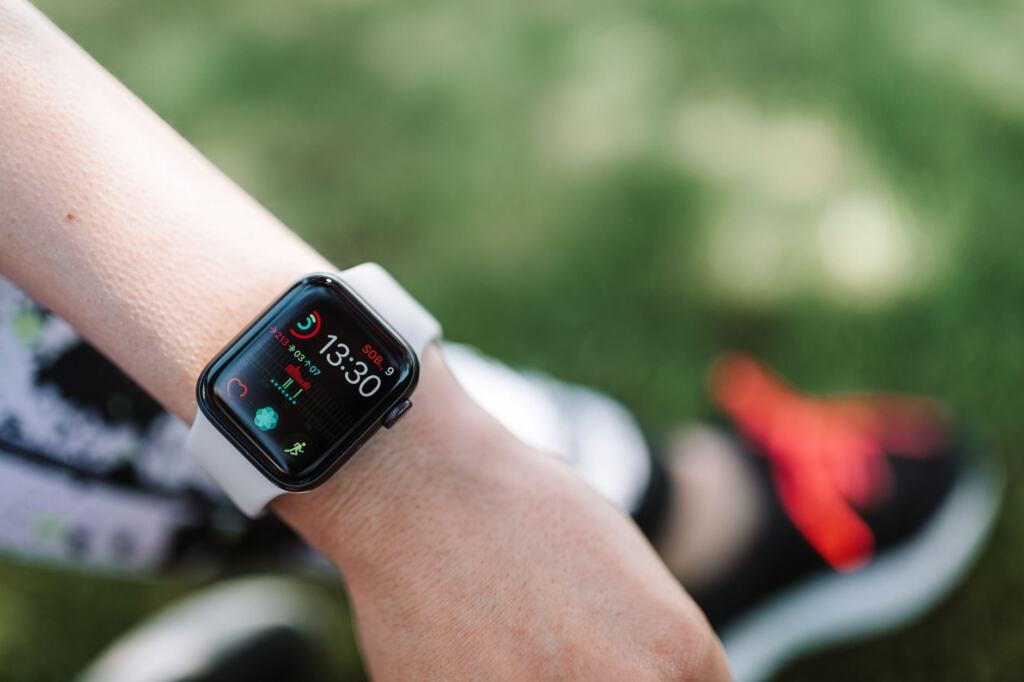
Wrist readings can be good enough to steer easy and moderate training, but they are only as dependable as the conditions around them. NordicTrack lists dehydration, stimulants and device calibration among the factors that can affect wearable accuracy. A reading that jumps or sits far from how the effort feels deserves a second look before you rebuild your zones around it.
- Check against effort. If a session you expect to be Zone 2 leaves you unable to talk, the number or the zone setting is wrong.
- Look at the setup first. A wrong maximum heart rate or an old profile shifts every zone, whatever the sensor does.
- Compare against a second sensor. If wrist readings look off during intervals, a chest strap is a reasonable cross-check.
Frequently asked questions
| Question | Answer |
|---|---|
| Do men and women use the same maximum heart rate formula? | Not in every formula. Samitivej Hospital gives 214 − (0.8 × age) for men and 209 − (0.7 × age) for women. Either way, the result is an estimate to check against effort. |
| How long can an easy aerobic session last? | NordicTrack describes this aerobic base range as gentle enough to sustain for 30–60 minutes or longer, which is why it suits longer base sessions. |
| How often should I do aerobic zone training? | Samitivej Hospital says aerobic exercise in zones 3–4 should be undertaken 3–5 days per week. |
| Can a device change my maximum heart rate on its own? | Some can. Myzone says its device recalibrates if you reach 100% too often during workouts, so check your watch’s settings to see whether yours does something similar. |