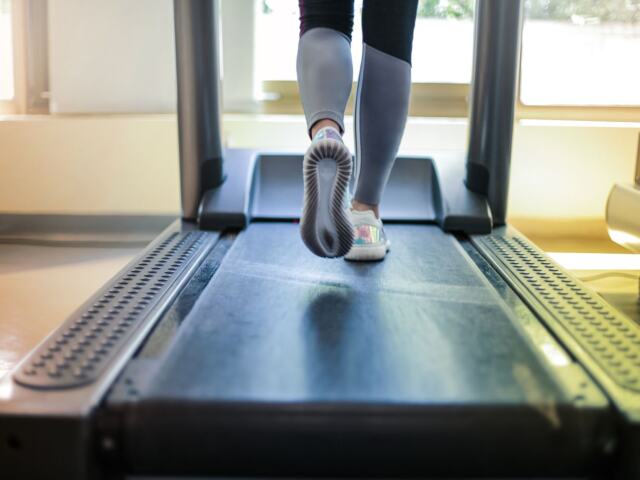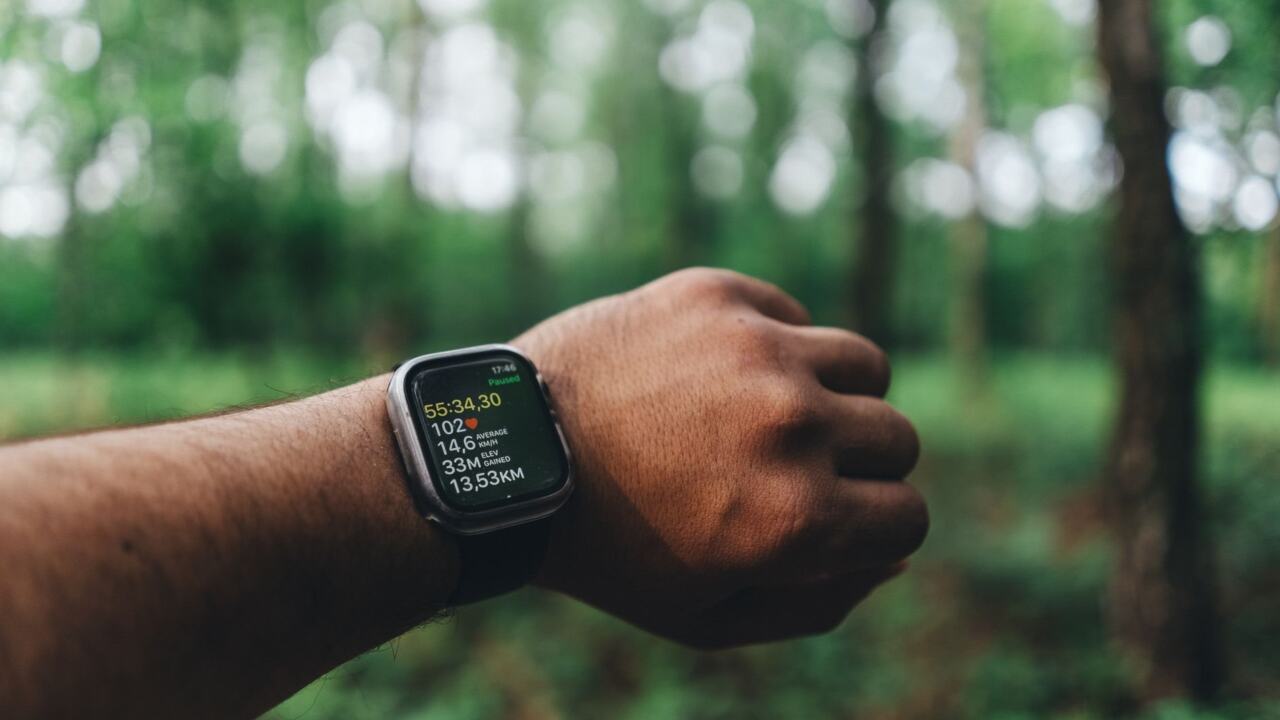
For VO2 max how to measure at home, run the Cooper 1.5 mile test or walk the Rockport mile. Both give estimates, while lab gas analysis measures oxygen use directly.
Pick one method, repeat it under the same conditions and judge changes against your own earlier results. If you log results on a wearable, the guide on how to use a fitness tracker covers the wider setup.
What the VO2 max number means
VO2 max is the most oxygen your body can use during maximal exercise. The University of Kansas Medical Center describes it as milliliters of oxygen consumed per kilogram of body weight per minute, written ml/kg/min. That body-weight-adjusted form is the one watches and field-test calculators report, so it is the figure to compare between methods.
The measurement is tied to the activity used to produce it. Wahoo notes that sport-specific VO2 tests give different values, and that a running test will typically show a higher value than cycling because more muscles are recruited. A cyclist who tests on a track and a cyclist who tests on a bike are therefore not measuring the same thing. Choose a method that matches your sport, then keep using it.
Which method you use also decides how direct the number is, starting with the laboratory reference.
Lab gas analysis
Lab gas analysis is the reference method because it measures what VO2 max describes. DexaFit explains that you cannot get an accurate reading without measuring ventilation plus the oxygen and carbon dioxide concentrations of inhaled and exhaled air. In practice the person wears a breathing mask while performing a treadmill test. Mend Colorado describes the same principle: research and clinical settings measure VO2 max by collecting respiratory gases.
The University of Kansas Medical Center notes that, under ACSM guidelines and safety recommendations, maximal exercise testing should be conducted on a treadmill. That matters for the way a lab number compares with other methods. A treadmill result reflects running, so cyclists should expect it to differ from a bike-based figure.
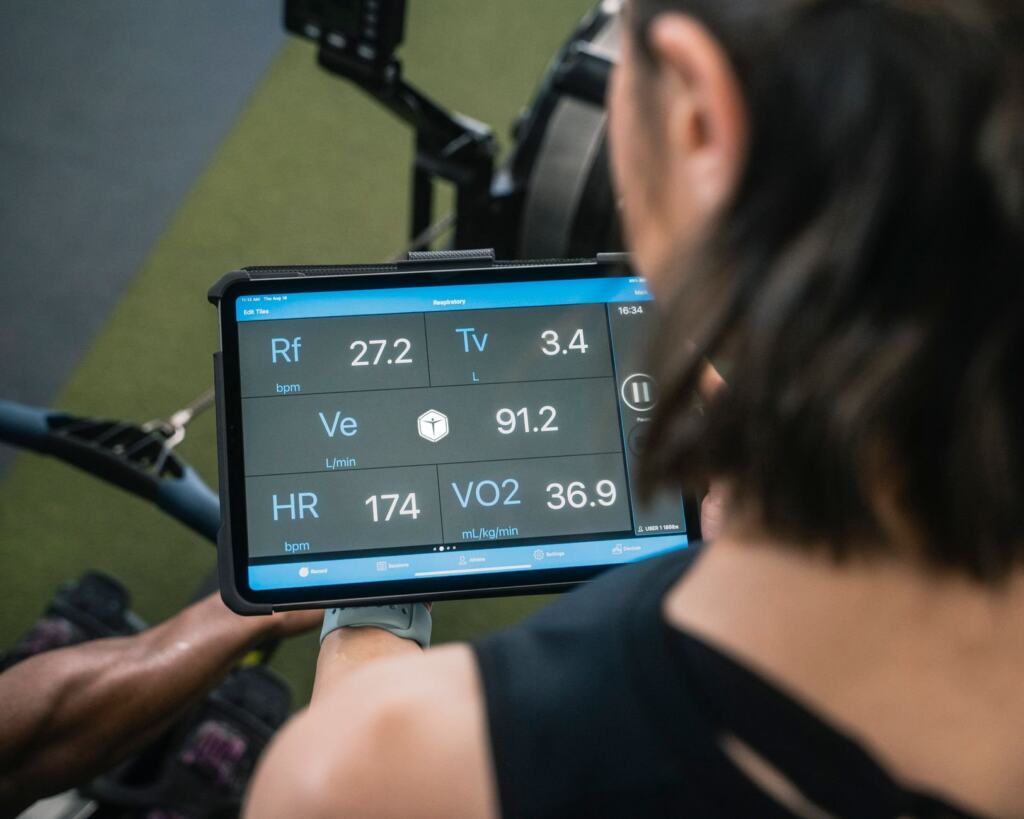
The drawback is practical. Mend Colorado calls the lab test impractical for most individuals because of its cost, equipment and personnel requirements. It suits someone who needs a direct baseline, for example to anchor later field or watch results. When booking, ask which exercise mode the lab uses, because that sets which sport the number represents.
Field tests you can do at home
Field tests estimate VO2 max from how far or how fast you cover a set distance. They need a measured course and a hard, honest effort. The Cooper Institute, which published the Cooper test, says these tests are for healthy and regularly active people. For anyone else it recommends a walking test such as the Rockport 1 Mile Walk as a much safer choice. Mend Colorado adds that every participant should check with a healthcare provider before beginning any test or exercise program.
Cooper 1.5 mile run, step by step
- Mark the distance. On a standard 400 m track, 1.5 miles is 6 laps and 15 meters. Count carefully, because 4 laps on a 400 m track is only 0.994 miles, according to the Cooper Institute.
- Warm up. Warm up for at least 5 minutes before starting.
- Run the distance. Stay in lane 1, the inside lane, for the entire test and hold a steady pace. Mend Colorado describes higher-level participants running, or mixing walking and running, to reach the fastest time.
- Record your time. Note the finishing time in minutes.
- Cool down. Walk for 5 to 10 minutes afterwards.
- Convert the time. The Cooper Institute gives the estimate as VO2 max = (483 / time in minutes) + 3.5, with the time being your 1.5 mile finish.
The Cooper Institute also says both the 12-Minute Run and the 1.5 Mile Run can be performed on a treadmill, which helps if no track is available.
The evidence behind the run test is respectable but limited to its original conditions. In the validation study, 115 U.S. Air Force officers and airmen ran for 12 minutes and then took a treadmill test within three days. The Cooper Institute reports a correlation of 0.897 between run distance and treadmill VO2 max. That supports the test as a practical estimate. It does not make a single run a replacement for gas analysis, and a pacing mistake or a poorly measured course will move your number.
Rockport 1 mile walk
The Rockport test suits people for whom a maximal run is not appropriate. Mend Colorado points out that it has established normative values and only requires a 1 mile distance. You record your time and heart rate, then enter both into an online calculator. The University of Kansas Medical Center cautions that these figures are estimates only, so treat the output as a rough position rather than a precise value.
Watch estimates
A watch VO2 max is an estimate, not a measurement. As DexaFit notes, an accurate reading requires measuring ventilation, oxygen and carbon dioxide, and a wrist device does not collect respiratory gases. Wahoo makes the matching point that VO2 max measurements are calculated in a laboratory setting.
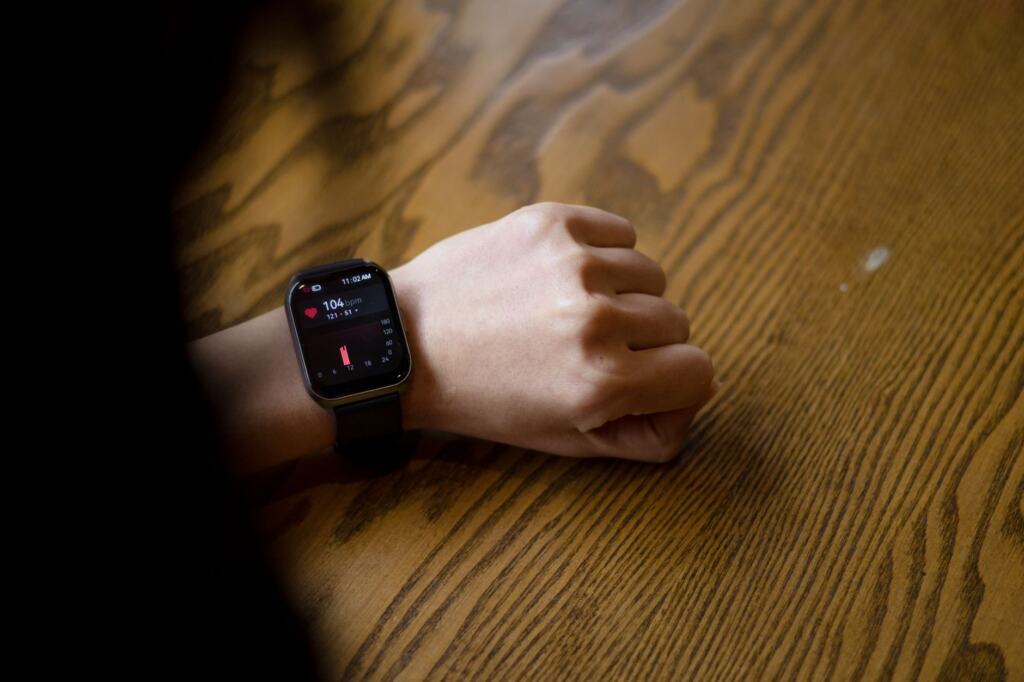
That does not make the watch figure useless, only a different kind of tool. Use it to follow your own direction of travel over weeks, within one sport and on one device. Do not use it to rank yourself against a lab or field figure, and do not switch devices and expect continuity. If a watch number surprises you, a Cooper run or Rockport walk gives an independent check made under conditions you control.
Heart rate also drives training intensity once you know your fitness level; Heart Rate Zones Explained: A Simple Guide To Training Smarter In 2026 – Bioconnected shows how to turn it into zones.
Lab, field and watch compared
| Method | What it uses | Cost and equipment | Evidence on accuracy | Planning use |
|---|---|---|---|---|
| Lab gas analysis | Respiratory gases collected during exercise | Costly; needs equipment and personnel | Direct measurement of oxygen use | Best for a baseline or when an exact value matters |
| Cooper 1.5 mile or 12-minute run | Finish time or distance run | A measured course and a timer | Correlation of 0.897 with treadmill VO2 max in 115 Air Force personnel (12-minute run) | Repeatable check for healthy, regularly active runners |
| Rockport 1 mile walk | Walk time and heart rate in an online calculator | A 1 mile distance | Established normative values; output is an estimate | Lower-intensity option for people who should not run maximally |
Figures here come from the Cooper Institute and Mend Colorado.
Choosing a method
- You need one exact number. Book lab gas analysis, and ask whether it is run on a treadmill so you know which sport it reflects.
- You are healthy, active and run regularly. Use the Cooper 1.5 mile run on a measured track and repeat it under similar conditions.
- You are not suited to maximal running. Use the Rockport walk, and speak to a healthcare provider first.
- You mainly cycle. Do not compare a track-based estimate directly with a bike-based figure, since running typically produces the higher value.
- You want a low-effort trend line. Let the watch track it, and confirm any large shift with a field test.
VO2 max is one fitness marker among several. Recovery measures sit alongside it, and Heart Rate Variability Charts By Age: What’s Normal At Every Decade (2026 Guide) – Bioconnected explains what is typical by age.
Frequently asked questions
Can I do the Cooper test on a treadmill?
Yes. The Cooper Institute states that both the 12-Minute Run and the 1.5 Mile Run tests can be performed on a treadmill.
Why would a run test give a higher VO2 max than a bike test?
Wahoo explains that running recruits more muscles, so you will likely see a higher value than in cycling. Compare each sport with its own earlier results.
What is the difference between absolute and relative VO2 max?
Wahoo defines the absolute value as liters of oxygen per minute. The relative value divides that by body weight and is reported in ml/kg/min, which is the form used by watches and field calculators.
When was the Cooper test published?
The results of the original 12-minute run study appeared in the Journal of the American Medical Association in January 1968, according to the Cooper Institute.