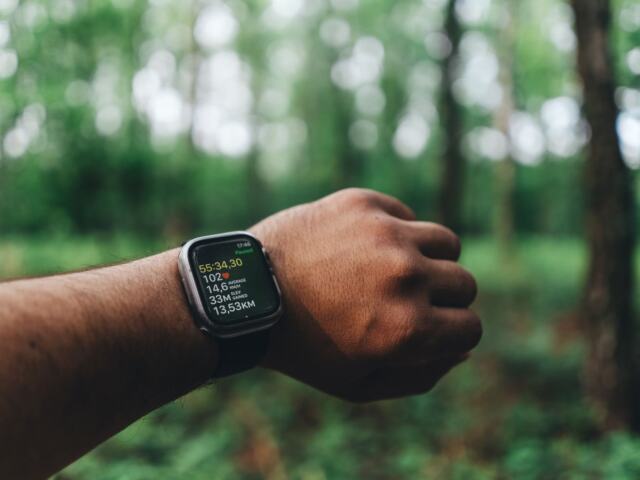
How to increase heart rate variability comes down to protecting sleep, keeping up regular aerobic exercise, practising slow breathing and limiting alcohol, then judging progress against your own baseline rather than a fixed number.
A tracker makes those habits visible from day to day. The broader guide on how to use a fitness tracker covers the wider setup, while this article focuses on what actually moves the HRV line and how to act on it.
What HRV measures and why habits can move it
Heart rate variability is the variation in time between heartbeats, measured in milliseconds. Healthline describes it as the time between each heartbeat and how that gap varies beat by beat. A higher reading is not a goal in itself. It is a signal about how well your body is switching between effort and recovery.
The recovery side belongs to the parasympathetic nervous system. This branch promotes rest and digest, acts through the vagus nerve, slows the heart and aids recovery. ZOE notes that it slows heart rate and lowers blood pressure during relaxation. Any habit that lets this branch do more of its work, such as better sleep, calmer breathing or fewer late drinks, is a candidate for lifting your numbers.
The same Ultrahuman guide states that good sleep and recovery boost HRV, while stress, intense exercise, illness and alcohol can lower it. That list is the practical map for the rest of this article. It also means HRV works as personal feedback: it gives information about multiple controllable factors in your lifestyle, so you can test which of them matter for you.
Habits that raise HRV
Sleep comes first
Decreased sleep quality is associated with lower HRV. The evidence describes a direction, not a size of effect, so treat sleep as the foundation rather than a precise lever. If your tracker also records sleep, use that data to spot which evenings are followed by weak mornings. Look for a pattern across several nights, not a verdict from one.
Exercise regularly, and leave room to recover
Dr John Day writes that regular daily exercise is probably the single best way to boost your HRV number. That is an author’s judgement, but it fits the mechanism: consistent aerobic work trains the recovery response. The same article describes a short-term dip after a killer workout, followed by a rise over time once the recovery period has passed. A low morning reading after a hard session is therefore expected, not a sign the training failed.
The limit is recovery. According to Bradford Rabin, MD, excessive cardio, meaning longer and more frequent sessions without sufficient recovery, will lower your HRV. If you pile on volume and your trend keeps sliding, the answer is more recovery, not more effort. Yoga is another option: Day reports that studies show it can move your HRV number upward, which makes it a reasonable recovery-day choice.
If you also track training energy, the guide Active Calories vs Total Calories: What Really Counts For Weight Loss And Fitness (2026 Guide) – Bioconnected helps you read the activity numbers that sit beside your HRV trend.
Slow, paced breathing
Breathing is the quickest habit to try because it needs no equipment. Ultrahuman describes resonant breathing at about 5 full breaths per minute, and says breathing at this rate has been shown to increase your HRV and reduce stress. It suits people whose readings dip on stressful days, because it targets the stress side of the picture directly. A short session on a mat or chair, repeated daily, is easier to sustain than an occasional long one.
Food, supplements and alcohol
Diet evidence is encouraging but narrower than the exercise and sleep evidence. In a study of 276 adult twins using 24-hour HRV, those who followed the Mediterranean diet most closely had the highest HRV. In a separate 6-week study, people eating almond snacks had higher HRV during mental stress than people eating control muffins. Both findings suggest an everyday, food-first approach is a sensible place to start.
Supplements deserve more caution. ZOE reports that scientific reviews say some supplements may increase HRV, and Healthline says a few studies have shown that vitamin B12 may improve HRV. The word “may” matters in both cases. Healthline’s advice is to always talk with your doctor before taking vitamins or supplements, so treat them as an optional extra after the basics, not a shortcut.
Alcohol sits on the other side of the ledger, since it is one of the factors named as lowering HRV. If you want a clean test, compare your readings after drinking nights with the nights you skip it.
Habit quick reference
| Habit or factor | Direction supported | Planning use |
|---|---|---|
| Sleep quality | Poorer sleep is associated with lower HRV; good sleep and recovery boost it | Protect sleep before changing anything else, and compare nights in your sleep data |
| Regular aerobic exercise | Supports HRV when kept up consistently | Favour steady routine over occasional heroic sessions |
| Excessive cardio | Longer, more frequent sessions without sufficient recovery lower HRV | Add recovery days when your trend keeps falling during a heavy block |
| Resonant breathing | About 5 full breaths per minute is linked to higher HRV and lower stress | Use as a short daily practice, especially on stressful days |
| Alcohol, illness, stress | Can lower HRV | Read a dip in light of these before blaming your training plan |
These directions come from Ultrahuman’s HRV guide and Bradford Rabin, MD.
Turning tracker data into daily decisions
The aim is to let your own numbers steer small changes. Dr Day frames the key idea as how far your HRV strays from your baseline, which makes your personal average more useful than anyone else’s target. For ranges and what they might mean, What’s A Good Heart Rate Variability Range? Practical Targets And How To Improve HRV In 2026 – Bioconnected goes further.
A simple routine keeps the data practical:
- Read at rest. Consumer HRV products do a pretty reasonable job as long as you are at rest, according to Day, so judge your trend from calm readings rather than workout figures.
- Note what happened the day before. Hard training, a late drink, illness or a stressful day are the usual explanations for a dip, so write one line beside the reading.
- Explain the dip before reacting. A dip after a heavy workout is expected and typically recovers. A dip with no clear cause deserves a closer look at sleep and stress.
- Change one habit at a time. If you add breathing practice and cut alcohol in the same week, you will not know which one moved the line.
- Look at the long view. Ultrahuman says its ring lets you see long-term HRV trends, and the same principle applies to any device that charts weeks and months.
Sleep tracking pairs naturally with this routine. When a poor sleep score and a low HRV reading land on the same morning, the link is easy to see, and it shows you which night-time habits are worth fixing first.

Which wearables measure HRV
HRV is now a commonplace metric on wearables such as the Oura Ring, Apple Watch and Fitbit, according to Bradford Rabin, MD. Ultrahuman’s ring also offers a trend view over weeks and months, which suits anyone building a baseline.
Not every device offers it, though. Healthline cautions that not all home fitness monitors and trackers measure HRV, so check the specifications before you buy. Accuracy needs a realistic expectation too. Day calls smartwatch HRV numbers notoriously inaccurate in some conditions, while saying consumer products are reasonable at rest. In practice, choose a device you will wear consistently and compare it only with itself, since a steady reading from one device is more useful than comparing numbers across brands.
Frequently asked questions
How long does HRV take to improve?
There is no fixed timetable, and it depends on what you change. Hard workouts cause a short-term dip before HRV rises over time, so expect lower readings first after a tough session. A 6-week almond study found higher HRV during mental stress. Gains also depend on continuing: Bradford Rabin, MD, says that after 4 weeks off regular aerobic exercise you will see a decline in HRV.
Do genetics and age limit how high HRV can go?
Partly. Twin studies show about a 40% contribution from genetics, and Healthline says it is typical for HRV to decrease as you age. That is why your own baseline and its direction matter more than comparing yourself with someone else.
Is a low HRV reading a warning sign?
One reading is best judged against your baseline. One overview reports that low HRV, below 15 or 20 on the scale it uses, correlates with increased risk of heart disease and death. If your readings are persistently low or you have health concerns, discuss them with a doctor.