Exoskeleton for elderly devices address mobility loss and fall risk by combining wearable mechanics with intelligent control. The technology supports walking, standing, transfers, and task-specific movements. Devices sense user intent, apply force where needed, and adjust assistance continuously to match fatigue, terrain, and activity. This article explains how these systems work in practical terms, the evidence-informed benefits for seniors, common device types and typical use cases, and the clinical and everyday considerations caregivers and clinicians use to choose a safe, effective option.
Key Takeaways
- Exoskeletons for elderly users enhance mobility by supporting walking, standing, and transfers, reducing fall risk and fatigue while enabling more independence in daily life.
- These devices use sensors, actuators, and control algorithms to detect user intent and provide real-time, adjustable assistance tailored to individual biomechanics and goals.
- Lower-limb exoskeletons can improve gait patterns, address issues like foot drop, and assist stair climbing; other designs focus on sit-to-stand transfers or trunk support.
- Choosing the right exoskeleton involves evaluating safety features, clinical suitability, fit and sizing, battery life, weight, donning/doffing time, and the total cost of ownership.
- With appropriate training, monitoring, and progressive protocols, regular use of exoskeletons for elderly people can increase independence, boost confidence, and reduce caregiver strain and injury risk.
- Successful adoption requires a multidisciplinary approach: clinician assessment, a trial period, professional fitting, caregiver education, and a maintenance plan to support long‑term use.
How Elderly Exoskeletons Work: Sensors, Actuators, and Control Systems
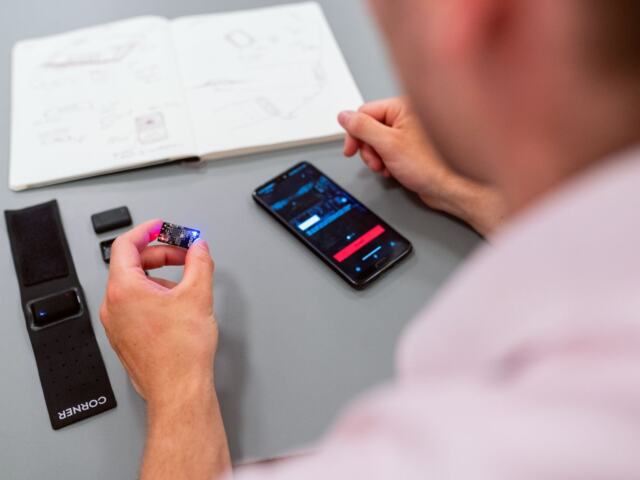
At a systems level, an exoskeleton for elderly users combines three core components: sensors to perceive motion and intent, actuators to generate assistive forces, and a controller that translates sensor input into coordinated output. Sensors commonly used include pressure sensors in the footplate to detect weight shift, inertial measurement units (IMUs) to track limb and trunk orientation, and force/torque sensors at joints to measure interaction loads. These signals feed control algorithms that determine when and how much assistance to apply, for example amplifying hip extension during stance or providing dorsiflexion at the ankle to correct foot drop.
Actuators vary by design—electric motors for precise, programmable torque; series-elastic actuators or springs for energy storage and passive assistance; and pneumatic elements in some rehabilitation systems. The controller can be event-based (reacting to gait events such as heel-strike), adaptive (modifying assistance according to measured performance), or user-driven (allowing manual adjustment of support level). Safety layers are integrated at hardware and software levels: mechanical stops to limit joint range, current limits and torque caps on motors, fall-detection and automatic lock mechanisms, and clearly accessible emergency-stop controls. Many systems also log usage and performance metrics that clinicians can review to tailor therapy and track progress over time.
Key Benefits for Seniors: Mobility, Fall Prevention, And Quality Of Life
An exoskeleton for elderly individuals can improve day-to-day function in multiple, complementary ways. Mechanically, exoskeletons supplement weakened muscles to increase step length, normalize gait timing, and reduce compensatory movements that cause fatigue. Functionally, this assistance can translate into longer, safer walks, easier transfers (for example, sit-to-stand), and reduced effort when navigating inclines or stairs. Psychologically, improved mobility often leads to greater confidence and engagement in social and community activities—important contributors to quality of life.
From a safety and caregiver perspective, exoskeletons can lower fall risk by stabilizing joint motion and providing support during balance-challenging tasks. This reduces the physical lifting or manual support demands placed on caregivers, decreasing the likelihood of caregiver injury. Clinicians use device data—step count, walking speed, assist level—to measure outcomes objectively and refine therapy. While not a replacement for comprehensive rehab, exoskeletons can act as a bridge to increased independence, complement ongoing physical therapy, and in some cases enable continued outpatient exercise programs when clinic access is limited.
Common Types Of Exoskeletons And Typical Use Cases
Exoskeletons for elderly users come in several common forms, each designed for particular needs: lower‑limb gait-assist devices focused on walking; sit-to-stand or transfer aids targeting transitions; trunk and lumbar support devices that reduce back strain; and hybrid systems offering multi-joint assistance. Lower‑limb systems are frequently used in clinics for gait training and by some home users to support daily ambulation. Sit-to-stand aids are popular where rising from chairs is the primary challenge.
Typical use cases include: outpatient rehabilitation programs using exoskeletons for repetitive, task-specific gait training; care facilities integrating devices into mobility schedules to reduce fall risk and caregiver burden; home users employing lightweight, easy-to-don units for daily tasks; and community centers offering supervised trial sessions to determine suitability. Clinicians often prescribe exoskeleton use alongside strengthening and balance exercises, progressing assistance levels as the user gains capability. Cognitive status, skin integrity, and comorbidities (for example, severe spasticity or advanced osteoporosis) influence which device type is appropriate.
Lower‑Limb Assistive Exoskeletons: Walking Support And Gait Assistance
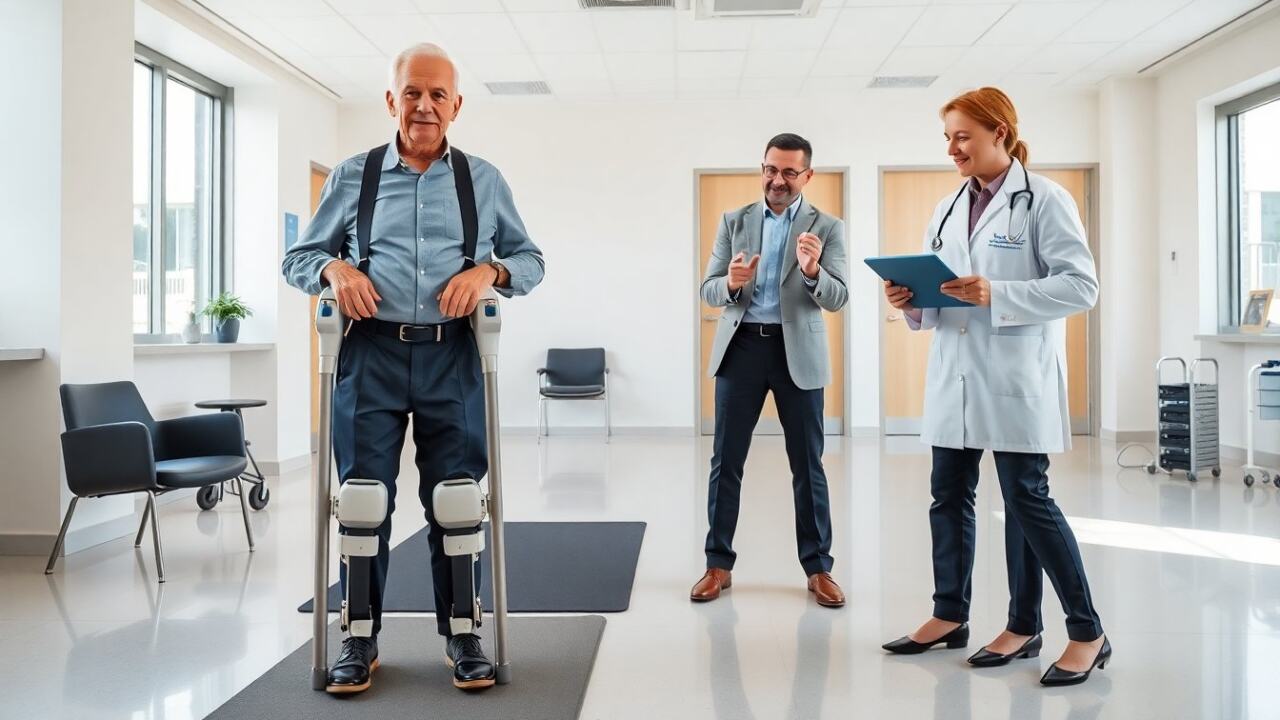
Lower‑limb designs target the hip, knee, and ankle to assist with key gait phases: initiation, swing, and stance. For example, an ankle dorsiflexion assist can reduce foot drop and the risk of tripping, while hip/knee assistance can help with leg swing and weight-bearing during stance. Therapists use these devices in structured protocols—timed walking drills, treadmill-assisted sessions, and stair negotiation practice—to reinforce more consistent gait patterns and gradually reduce reliance on external cues.
Clinical monitoring during sessions typically includes observation of balance reactions, heart rate and perceived exertion, and assessment of skin under straps and pads to prevent pressure injuries. Progress is tracked through measures such as walking distance or time, ability to perform transfers without assistance, and the percentage of independent steps. In many programs, users transition from higher assistance to lower assistance modes as strength and motor control improve, using the exoskeleton both as a therapeutic tool and as an assistive device for daily life.
Choosing An Exoskeleton: Safety, Cost, Fit, And Practical Considerations
Selecting an exoskeleton for elderly use requires a structured evaluation. Safety is first: review built-in fail-safes, emergency-stop accessibility, and how the device responds to unexpected slips or loss of balance. Fit and anthropometrics matter—proper alignment minimizes shear and pressure, so confirm available sizes, adjustability, and whether a certified technician will complete the initial fit. Donning and doffing time affect daily feasibility; devices that take many minutes to put on may be impractical for everyday use without caregiver support.
Cost considerations include the purchase price, leasing or rental options, warranty, maintenance plans, and availability of local servicing. Battery life and charging behavior should match routines—short runtime can limit outings or therapy sessions. Training requirements are often overlooked: successful adoption depends on clinician-guided training protocols, caregiver education on safe assistance strategies, and a plan for progressive reduction or modification of support as the user improves. Contraindications (for example, unstable fractures, uncontrolled cardiac conditions, or severe cognitive impairment preventing safe cueing) must be reviewed by the clinical team.
Finally, practical steps for evaluation and adoption: arrange a supervised trial to observe real-world benefit; document functional goals and baseline measures; confirm whether the device integrates with existing mobility aids (walkers, rollators); establish a maintenance and cleaning schedule; and plan follow-up assessments to document outcomes for reimbursement or continued funding. A multidisciplinary team—including physical therapists, physicians, occupational therapists, and caregivers—helps ensure the chosen exoskeleton fits clinical needs, lifestyle, and safety requirements.